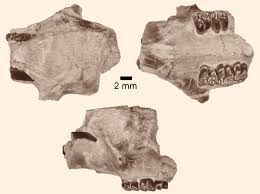


EALING: A beaver fossil from 28 million years ago was discovered in eastern Oregon. Researchers believe this ancient species was a forerunner of today’s modern beavers.
Microtheriomys brevirhinus is the first ancient beaver found which is believed to be related to the modern-day animals. Researchers theorize the creature also was related to Asian beavers that crossed the Bering Strait, entering North America roughly seven million years before our own time. The extinct species was roughly half the size of its modern-day counterpart, called Castor.
The ancient beaver fossils, a skull and teeth, were found less than a mile away from the visitor center at John Day Fossil Beds National Monument in Kimberly, Ore. The modern version of the animal is seen on the official flag of the Beaver State.
This ancient species lived alongside other creatures, now extinct, such as saber-toothed tigers, three-toed horses, a rhinoceros with a pair of horns, and giant pigs.
“While there is relatively little castorid (beaver species) diversity today, there are hundreds of species (many of which are really important members of their faunal communities) in the fossil record of the Northern Hemisphere, and a better understanding of their diversity and evolutionary relationships has a lot to tell us about processes driving mammalian evolution over the last 40 million years,” Samantha Hopkins, a paleontologist with the University of Oregon, said.
Fossils of Microtheriomys brevirhinus were found alongside those of 20 other extinct rodents, including a dwarf tree squirrel and pocket mouse. Dating was determined from layers of volcanic ash immediately above and below the geological finds. The age of each of those layers was measured through examination of radioactive isotopes in the material.

Pakistan to get $3b loan from Islamic Trade Financing Corporation
ISLAMABAD: Islamic Trade Financing Corporation (ITFC) to provide Pakistan with a $3 billion loan, according to an official statement released...