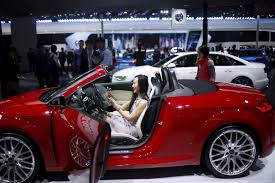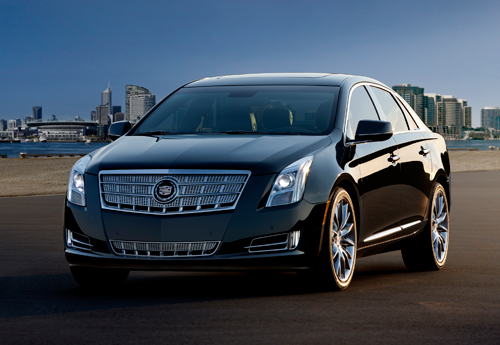
BEIJING: Non-German global brands including Cadillac, Lexus and Infinite have strongly challenged Audi, BMW and Mercedes-Benz in China’s luxury car market.
Now comers PSA/Peugeot-Citroen, which is trying to gain a foothold in the luxury market with its DS brand. The French automaker established a joint venture with Changan Automobile Co. in 2011. Then the partnership set up a new dealership network and built an assembly plant to produce DS cars.
The joint venture’s first product, the DS 5 hatchback, went on sale a year ago. In March, the venture introduced its second model, the DS 5LS, a three-box sedan version of the DS 5. Sales have been modest so far. Through September, only 15,000 units have been delivered since the two cars were launched.
Demand has been slow even though the DS models are priced below their German rivals. The DS 5LS sells for only 146,900 yuan (18,723 euros), while pricing for the DS 5 starts at 219,900 yuan. In September, the joint venture’s third model, the DS 6 crossover, hit the market with a starting price of 193,900 yuan.
By contrast, most Audi, BMW and Mercedes cars sell for more than 300,000 yuan.
The DS models’ low prices suggest that strong competition in the luxury market has forced PSA to backpedal from its effort to move the brand upscale.
Infiniti is another non-German luxury brand that has had limited success in China.
Nissan’s luxury brand has launched a number of new models in China, but demand remains modest. In the first eight months of this year, fewer than 18,300 Infiniti vehicles were sold.
Lexus is another example of a luxury brand that has failed to catch on in China. In 2008, Toyota’s premium brand was in a good position to challenge Mercedes, the third-largest luxury brand in China.
Lexus sales that year totaled 31,550 units — within reach of Mercedes, which delivered 43,009 units, according to LMC Automotive.
But Toyota stubbornly refused to produce Lexus cars in China, depriving the brand of an opportunity to catch its German rivals.
Given China’s 25 percent import tariff, imported Lexus cars simply could not compete against Chinese-built Audi, BMW and Mercedes models.
Toyota does not disclose monthly Lexus sales in China. But Autohome, a Chinese market research firm, estimates that Lexus tallied total sales of fewer than 40,000 vehicles in the first six months of 2014.
In the same period, Mercedes sales in China approached 136,000 vehicles.
Only two global brands, Volvo and Cadillac, are moving quickly to expand production in China.
Volvo, owned by private Chinese automaker Zhejiang Geely Holding Group Co., has opened two plants in China that combined can build 200,000 vehicles a year.
General Motors, which now produces the Cadillac XTS in its Jinqiao plant in Shanghai, is constructing another plant in Shanghai that can build up to 160,000 Cadillac vehicles a year starting in 2016.
The two brands have also accelerated plans to introduce new models in China.
But for two reasons, neither will mount a serious challenge to the German marques anytime soon.
For starters, their sales in China are still low. In the first nine months, Volvo sold 58,910 vehicles while Cadillac delivered 52,425.
By contrast, Audi sold 415,704, BMW delivered 335,863 and Mercedes sold 203,485 vehicles during the period. Altogether they own around 75 percent of the Chinese luxury car market.
It will take a very long time for Volvo and Cadillac to narrow their sales gaps with the German brands.
Moreover, Volvo and Cadillac suffer from a much more serious disadvantage — they lack the high name recognition in China that the German brands enjoy.
Audi started making cars in China in 1991, and BMW and Mercedes have been producing vehicles in the country for a decade. They command a strong following among Chinese car buyers.