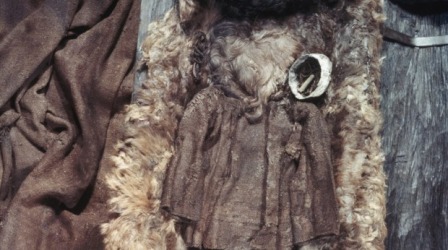

LUSAKA: In 1921, archaeologists exploring an ancient burial mound near Egtved, a village in Denmark, unearthed the grave of a girl estimated to have been 16 to 18 years old when she died.
Not much remained of her body – only some hair, teeth, nails, and bits of skin and brain – but scholars could tell a lot about her. Dressed in fine woollen clothing, with a bronze medallion on her belt that likely represented the sun, the Egtved Girl, as she came to be known, was believed to be a person of high status. She was buried with the cremated remains of a small child and a bark bucket that once contained beer. Analysis of the oak coffin in which she lay revealed that she died about 3400 years ago.
This week, nearly a century after she was discovered, a team of researchers in Denmark filled in more detail of the Egtved Girl’s life story. By analysing chemicals in her body and in the items in her coffin, they were able to surmise that she hadn’t been born in Denmark, that her diet lacked protein from time to time, and that she travelled widely in the final months of her life.
“Our study provides evidence for long-distance and periodically rapid mobility. Our findings compel us to rethink European Bronze Age mobility as highly dynamic, where individuals moved quickly, over long distances in relatively brief periods of time,” the researchers wrote, in a study published on Thursday in the journal Scientific Reports.
According to a statement issued by the University of Copenhagen, the analysis marks the first time scientists have been able to track the movements of a prehistoric person with such precision.

Tesla driverless system to use updated radar technology
WASHINGTON: Electric carmaker Tesla announced Sunday it was upgrading its Autopilot software to use more advanced radar technology. In a...