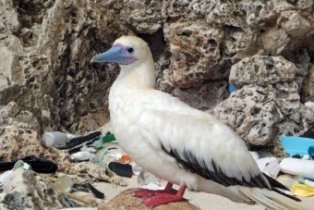

HONG KONG: Seabirds often confused bright plastics for krill or shrimp, scooping them up and even feeding them to their young.
MIAMI, Florida-Most seabirds have already eaten plastic in the oceans, and scientists projected Monday that 99 percent will have done so by 2050.
A new study from Proceedings of the National Academy of Sciences has shed light on the extent of the problem, including new information about just where most plastics are found today. “
This is a huge amount and really points to the ubiquity of plastic pollution.”
Researchers reviewed studies on 135 bird species between 1962 and 2012, then made projections based on the now known level of plastics in the oceans.
After analyzing a series of published studies since the 1960s, the researchers found that seabirds are finding it increasingly hard to avoid consuming plastic.
The plastic which is consumed by the seabirds enter into oceans from urban rivers and sewers.
“For the first time, we have a global prediction of how wide-reaching plastic impacts may be on marine species-and the results are striking”, said senior research scientist Dr. Chris Wilcox in a CSIRO statement. We used this tuned model to predict risk across seabird species at the global scale. Accidentally ingested plastic items like these cause gut impaction and weight loss in birds and might even lead to death in extreme cases.

Tesla driverless system to use updated radar technology
WASHINGTON: Electric carmaker Tesla announced Sunday it was upgrading its Autopilot software to use more advanced radar technology. In a...