
Customs Today
  • Home
  • Islamabad
  • Karachi
  • Lahore
  • National
  • Transfers and Postings
  • Chambers & Associations
  • Business
No Result
View All Result
Customs Today
  • Home
  • Islamabad
  • Karachi
  • Lahore
  • National
  • Transfers and Postings
  • Chambers & Associations
  • Business
No Result
View All Result
Customs Today
No Result
View All Result
Home Science & Technology Science

Zebrafish flex their muscles for research aboard Int’l Space Station

byCustoms Today Report
05/02/2015
in Science, Science & Technology
Share on FacebookShare on Twitter

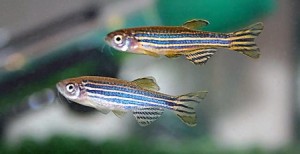
WASHINGTON: Though zebrafish are not deadlifting weights in orbit, they are helping researchers learn about muscle changes during their stay aboard the International Space Station.

This impacts not only the fish, but also the crew and can have implications for Earth-related muscle challenges too. The Japan Aerospace Exploration Agency’s (JAXA) Zebrafish Muscle investigation observes the effects of microgravity on the zebrafish, Danio rerio, a tropical freshwater fish belonging to the minnow family.
This research has the potential to lead to new drugs or treatments for patients on extended bed rest or with limited mobility. In addition to the potential human benefits, results from this study could aid researchers in developing countermeasures for muscle weakness in astronauts living in microgravity during extended missions.
“The main question of the Zebrafish Muscle experiment is whether atrophy of muscles under microgravity also occurs in fish, and why that muscle atrophy occurs in microgravity,” explains Atsuko Sehara-Fujisawa, principal investigator and professor at Kyoto University in Kyoto, Japan.
Muscle atrophy is the wasting of muscle tissue. This occurs in microgravity since the muscles are not used to resist the force of gravity, as they would be on the ground. Astronauts mitigate this atrophy through prescribed daily exercise, yet some still lose bone and muscle mass during extended spaceflight.


You might also like

Tesla driverless system to use updated radar technology

12/09/2016

Apple to develop its own self-driving technology

10/09/2016

In this investigation, the zebrafish is used as a model for comparison to larger organisms. Researchers use model organisms such as plants, animals or microbes like yeast to study the influence of microgravity on cells. Taking these organisms to space allows for examination of growth and development and physiological, psychological and aging processes without the impact of gravity. Previous observation of Medaka fish aboard the station monitored changes in bone impacted due to the microgravity environment.


Related Stories

Tesla driverless system to use updated radar technology

byCT Report
12/09/2016

WASHINGTON: Electric carmaker Tesla announced Sunday it was upgrading its Autopilot software to use more advanced radar technology. In a...

Apple to develop its own self-driving technology

byCT Report
10/09/2016

SAN FRANCISCO: Apple may not become an automaker, but it still wants to develop its own self-driving technology. The iPhone-maker's...

NASA spots slowest known magnetar

byCT Report
10/09/2016

WASHINGTON: Astronomers have found evidence of a magnetar - magnetised neutron star - that spins much slower than the slowest...

‘YouTubers’ outshining old-school television

byCT Report
09/08/2016

SAN FRANCISCO: A media revolution is taking place, and most people over 35 years of age aren’t tuned in. Millennial...

Next Post

Brent crude prices jump to $57 per barrel

  • Terms and Conditions
  • Disclaimer

© 2011 Customs Today -World's first newspaper on customs. Customs Today.

No Result
View All Result
  • Transfers and Postings
  • Latest News
  • Karachi
  • Islamabad
  • Lahore
  • National
  • Chambers & Associations
  • Business
  • About Us

© 2011 Customs Today -World's first newspaper on customs. Customs Today.