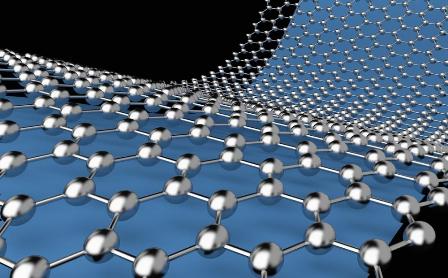
NEW YORK: Researchers from the University of Texas have revealed that they have created a one-atom-thin silicon transistor.
Researchers noted that silicon has some great properties as far as conducting electricity, but also noted that up until now, working with this material was nearly impossible. Summoning their electrical power, while creating something that would be workable is what Texas University did, and now, time will tell whether this becomes some sort of standard for super-fast computing. “Apart from introducing a new player in the playground of 2-D materials, silicone, with its close chemical affinity to silicon, suggests an opportunity in the road map of the semiconductor industry,” said Deji Akinwande, who worked on the team that made the discovery. He went on to point out and call this a “major breakthrough” within the semiconductor space.
The great thing about silicon is that it’s relatively low-energy compared to other materials used and other formations. The advent of this small, low-energy product is something that will serve serious benefits in the long-term of computing. Right now, there aren’t a lot of applications at which this can be readily applied to. However, this is something that could prove to completely revolutionize the space as we know it in the long-term. The qualities that the silicone has, and the relative use, makes for a product that could revolutionize – also due to its shape. This is in stark contrast to the traditional 3-D model that is regularly used for this type of semiconductor, and material.
NEW YORK: Researchers from the University of Texas have revealed that they have created a one-atom-thin silicon transistor.


Researchers noted that silicon has some great properties as far as conducting electricity, but also noted that up until now, working with this material was nearly impossible. Summoning their electrical power, while creating something that would be workable is what Texas University did, and now, time will tell whether this becomes some sort of standard for super-fast computing. “Apart from introducing a new player in the playground of 2-D materials, silicone, with its close chemical affinity to silicon, suggests an opportunity in the road map of the semiconductor industry,” said Deji Akinwande, who worked on the team that made the discovery. He went on to point out and call this a “major breakthrough” within the semiconductor space.
The great thing about silicon is that it’s relatively low-energy compared to other materials used and other formations. The advent of this small, low-energy product is something that will serve serious benefits in the long-term of computing. Right now, there aren’t a lot of applications at which this can be readily applied to. However, this is something that could prove to completely revolutionize the space as we know it in the long-term. The qualities that the silicone has, and the relative use, makes for a product that could revolutionize – also due to its shape. This is in stark contrast to the traditional 3-D model that is regularly used for this type of semiconductor, and material.