Customs Today
  • Home
  • Islamabad
  • Karachi
  • Lahore
  • National
  • Transfers and Postings
  • Chambers & Associations
  • Business
No Result
View All Result
Customs Today
  • Home
  • Islamabad
  • Karachi
  • Lahore
  • National
  • Transfers and Postings
  • Chambers & Associations
  • Business
No Result
View All Result
Customs Today
No Result
View All Result
Home Science & Technology Science

Gravitational waves from early universe remain elusive: NASA report

byCustoms Today Report
05/02/2015
in Science, Science & Technology
Share on FacebookShare on Twitter

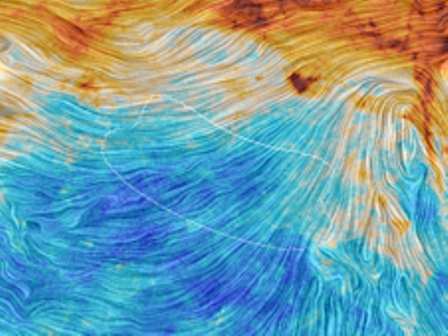
HONG KONG: Despite earlier reports of a possible detection, joint data analysis by the European Space Agency’s Planck space mission and ground-based experiment BICEP2 has found no conclusive evidence of gravitational waves from the birth of universe.

The collaboration has resulted in the most precise knowledge yet of what signals from the ancient gravitational waves should look like, aiding future searches.


You might also like

Tesla driverless system to use updated radar technology

12/09/2016

Apple to develop its own self-driving technology

10/09/2016

BICEP2 and its sister project, the Keck Array, are based at the South Pole and funded by the US National Science Foundation.

“By analysing both sets of data together, we could get a more definitive picture of what’s going on than we could with either dataset alone,” said Charles Lawrence, project scientist for Planck at NASA’s Jet Propulsion Laboratory, Pasadena, California.

The joint analysis shows that much of the signal detected by BICEP2/Keck is coming from dust in the Milky Way, but we cannot rule out a gravitational wave signal at a low level. This is a good example of how progress is made in science, one step at a time,” Lawrence said.

Planck and BICEP/Keck were both designed to measure relic radiation emitted from our universe shortly after its birth 13.8 billion years ago.

An extraordinary source of information about the universe’s history lies in this “fossil” radiation, called the cosmic microwave background (CMB).

Planck mapped the CMB over the entire sky from space, while BICEP2/Keck focused on one patch of crisp sky over the South Pole.

The final results showed that most of the original signal, but not necessarily all of it, could be explained by dust in our Milky Way.

As for signs of the universe’s inflationary period, the question remains open.

The joint study sets an upper limit on the amount of gravitational waves from inflation, which might have been generated at the time but at a level too low to be confirmed by the present analysis.


Tags: BICEP2Charles Lawrenceearly universe remain elusiveEuropean Space Agency's Planck spacegravitational wavesKeck ArrayPlanck at NASA's Jet Propulsion LaboratoryUS National Science Foundation.

Related Stories

Tesla driverless system to use updated radar technology

byCT Report
12/09/2016

WASHINGTON: Electric carmaker Tesla announced Sunday it was upgrading its Autopilot software to use more advanced radar technology. In a...

Apple to develop its own self-driving technology

byCT Report
10/09/2016

SAN FRANCISCO: Apple may not become an automaker, but it still wants to develop its own self-driving technology. The iPhone-maker's...

NASA spots slowest known magnetar

byCT Report
10/09/2016

WASHINGTON: Astronomers have found evidence of a magnetar - magnetised neutron star - that spins much slower than the slowest...

‘YouTubers’ outshining old-school television

byCT Report
09/08/2016

SAN FRANCISCO: A media revolution is taking place, and most people over 35 years of age aren’t tuned in. Millennial...

Next Post

Australian dollar gains in Asian trade

  • Terms and Conditions
  • Disclaimer

© 2011 Customs Today -World's first newspaper on customs. Customs Today.

No Result
View All Result
  • Transfers and Postings
  • Latest News
  • Karachi
  • Islamabad
  • Lahore
  • National
  • Chambers & Associations
  • Business
  • About Us

© 2011 Customs Today -World's first newspaper on customs. Customs Today.