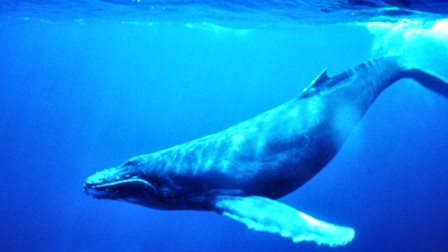
MALI: Researchers have been listening to the distinctive songs of the Antarctic blue whale to find concentrations of the endangered mammals in the Southern Ocean.
Using underwater acoustic technology, including directional sonobouys, they were able to identify seven areas of high acoustic activity and were able to visually sight 84 Antarctic blue whales, take 50 photo identifications, collect 23 biopsy samples for genetic analysis and deploy two satellite tags.


Antarctic Blue Whale Project leader, Mike Double, said the whales were clustered together into distinct regions, generating an intense source of low-frequency calls.
“We encountered seven distinct hotspots for blue whales in our survey area and some of these were detectable from 600 nautical miles (1,100 kilometres) away,” Dr Double said.
“There was a steady increase in the intensity of song and other vocalisations as we approached these regions, which suggests that these acoustic hotspots may persist for several days, even if individual whales within them may change.”
He said this meant that targeting acoustic hotspots, even from long distances, was a reliable method for encountering Antarctic blue whales.
The research, led by the Australian Antarctic Division, was conducted during a seven-week voyage to the Southern Ocean in 2013.
Acoustician at the Australian Antarctic Division, Brian Miller was part of the 18-strong team of observers, cetacean biologists and acousticians.
“Antarctic blue whales have very loud, low-frequency songs that are distinctive from other populations of blue whales,” Dr Miller said.
“Initially we deployed single sonobuoys to establish the direction of the sound and then as we got closer and the intensity of the sound increased, we deployed multiple sonobuoys to triangulate the whales’ position.”
He said this method allowed the researchers to locate whales to within a few kilometres – close enough for visual sightings.