Customs Today
  • Home
  • Islamabad
  • Karachi
  • Lahore
  • National
  • Transfers and Postings
  • Chambers & Associations
  • Business
No Result
View All Result
Customs Today
  • Home
  • Islamabad
  • Karachi
  • Lahore
  • National
  • Transfers and Postings
  • Chambers & Associations
  • Business
No Result
View All Result
Customs Today
No Result
View All Result
Home Science & Technology Science

British scientists seek £50 million funding to study exoplanets

byCustoms Today Report
11/02/2015
in Science, Science & Technology
Share on FacebookShare on Twitter

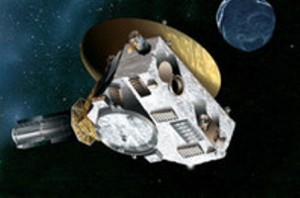
NEW YORK: A group of British scientists are trying to raise £50m to launch a spacecraft from Surrey to monitor some of the Milky Way’s exoplanets.Exoplanets are planets that orbit stars other than our sun and there are thought to be tens of billions in the galaxy.

The Twinkle proposal, announced at the university here, with a mission to check out at least 100 exoplanets in the Milky Way.


You might also like

Tesla driverless system to use updated radar technology

12/09/2016

Apple to develop its own self-driving technology

10/09/2016

The mission, explained to Astronomy Now, would use Twinkle’s main instrument, an infrared spectrograph, to examine planets like rocky super-Earths (in the mass range up to ten times that of Earth) and “hot Jupiters” (gas giants near their star). Large planets near bright stars might even yield enough data to map their clouds and surface.

The Twinkle project’s media release notes that its lead scientist is professor Giovanna Tinetti, who worked on both the Hubble and Spitzer space telescope projects.

“Knowledge of the chemical composition of exoplanet atmospheres is essential for understanding whether a planet was born in the orbit in which it is currently observed or whether it has migrated from a different part of its planetary system” the press release continues.

The makeup of atmospheres – driven by collisions with other objects, the loss of lighter molecules, volcanic activity or even the presence of organic molecules or life – gives strong hints about the history of a planet and its ability to sustain life.


Related Stories

Tesla driverless system to use updated radar technology

byCT Report
12/09/2016

WASHINGTON: Electric carmaker Tesla announced Sunday it was upgrading its Autopilot software to use more advanced radar technology. In a...

Apple to develop its own self-driving technology

byCT Report
10/09/2016

SAN FRANCISCO: Apple may not become an automaker, but it still wants to develop its own self-driving technology. The iPhone-maker's...

NASA spots slowest known magnetar

byCT Report
10/09/2016

WASHINGTON: Astronomers have found evidence of a magnetar - magnetised neutron star - that spins much slower than the slowest...

‘YouTubers’ outshining old-school television

byCT Report
09/08/2016

SAN FRANCISCO: A media revolution is taking place, and most people over 35 years of age aren’t tuned in. Millennial...

Next Post

European stocks open marginally higher, Frankfurt surges 0.11%

  • Terms and Conditions
  • Disclaimer

© 2011 Customs Today -World's first newspaper on customs. Customs Today.

No Result
View All Result
  • Transfers and Postings
  • Latest News
  • Karachi
  • Islamabad
  • Lahore
  • National
  • Chambers & Associations
  • Business
  • About Us

© 2011 Customs Today -World's first newspaper on customs. Customs Today.