Customs Today
  • Home
  • Islamabad
  • Karachi
  • Lahore
  • National
  • Transfers and Postings
  • Chambers & Associations
  • Business
No Result
View All Result
Customs Today
  • Home
  • Islamabad
  • Karachi
  • Lahore
  • National
  • Transfers and Postings
  • Chambers & Associations
  • Business
No Result
View All Result
Customs Today
No Result
View All Result
Home Uncategorized

Northern Australia’s 56 mammals face extinction

byCustoms Today Report
11/02/2015
in Uncategorized
Share on FacebookShare on Twitter

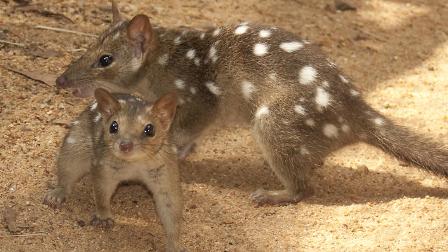
SYDNEY: Researchers from Charles Darwin University say a further 56 Australian land mammals are also endangered, mainly as a result of predators.

One of the study’s key reseachers Professor John Woinarski said the study highlighted the need for more effective strategies to protect native mammals from extinction.

You might also like

Pakistan to get $3b loan from Islamic Trade Financing Corporation

20/10/2024

Lahore I&I & Enforcement anti-smuggling operations achieve record success in early FY 2024-25

10/09/2024

“We’ve tried to make the community aware that we’ve got a serious problem here,” he said.

“Our society also has to figure out whether it values these things and then we can take a whole series of management responses and this includes protecting offshore islands that currently don’t have cats or foxes on them.”

“We could then move some of the most endangered species to some of those islands.”

Professor Woinarski said a good example over the past decade has been the relocation of many Tasmanian devils to Maria Island to help protect the species from predators.

He also said baiting programs may have some impact on combating feral cat and red fox populations on the Australian mainland.

“But there are still some dangers with those programs because there is the possibility of some native species also being affected by that baiting and we don’t want that to occur,” Professor Woinarski added.

He said Australians also needed to play their part in adopting more ecologically sustainable lifestyles to give native mammal species a strong chance of surviving in the longer term.

“We can reduce our spending on pets which is six billion dollars per year which I think far outstrips what individuals are spending on conservation actions,” Professor Woinarski said.

“We can also learn more about these species. One of the problems is that most Australians don’t know what a bilby or a dalgyte is.”


Tags: : Researchers from Charles Darwin Universitymammals face extinctionNorthern Australian mammalsProfessor Woinarskireseachers Professor John Woinarski

Related Stories

Pakistan to get $3b loan from Islamic Trade Financing Corporation

byCT Report
20/10/2024

ISLAMABAD: Islamic Trade Financing Corporation (ITFC) to provide Pakistan with a $3 billion loan, according to an official statement released...

Lahore I&I & Enforcement anti-smuggling operations achieve record success in early FY 2024-25

byCT Report
10/09/2024

LAHORE:  Regional Directorate of Customs Intelligence & Investigation has demonstrated exceptional performance in the first two months of the fiscal...

ICCI and CDA to join hands for tree plantation drive in Capital

byQaisar Mansoor
09/08/2023

ISLAMABAD: Islamabad Chamber of Commerce and Industry (ICCI) in collaboration with the Capital Development Authority (CDA) would jointly launch a...

Customs Officials Yawar Abbas & Tariq Mehmood kidnapped in Karachi

byCT Report
08/07/2023

KARACHI: Customs Intelligence Officer Yawar Abbas and Customs Preventive Officer Tariq Mehmood who were working against smuggling were kidnapped by...

Next Post

Toshiba launches $2090 Protege Z20t hybrid laptop to challenge Apple’s MacBook Air, Dell’s XPS 13

  • Terms and Conditions
  • Disclaimer

© 2011 Customs Today -World's first newspaper on customs. Customs Today.

No Result
View All Result
  • Transfers and Postings
  • Latest News
  • Karachi
  • Islamabad
  • Lahore
  • National
  • Chambers & Associations
  • Business
  • About Us

© 2011 Customs Today -World's first newspaper on customs. Customs Today.