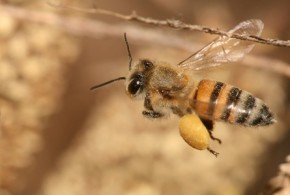
WASHINGTON: A team of researchers say that the collapse of bee populations around the globe may be linked to excessive environmental pressures placed on honeybees.
Scientists have discovered that bees subjected to the wrong kinds of environmental stimuli tend to begin foraging before they’ve reached maturity. Doing so often proves fatal, leading to a series of events that can all too easily cause an entire colony of bees to collapse. The disappearance of bees from ecosystems has been a cause of concern for several years, as without the presence of honeybees crop pollination could easily grind to a standstill.


Researchers fitted several bees with radio frequency ID tags, providing them to closely monitor the impact of stress stimulus on bee colonies. Based on existing research, stress sources for beehives have been linked to gut parasites, Varroa destructor mites, and human intervention through the use of agricultural chemicals and pesticides. These stressors can drive away juvenile bees that haven’t developed enough to forage for the hive properly; researchers found that bees placed under excessive stress would leave the hive prior to reaching 14 days old, which is when the insects would be developed enough to perform properly.
These young bees are simply not productive enough to support the hive as well as a fully matured bee, according to the research findings. Immature bees were less likely to survive their initial flight, performed fewer flights afterwards, and overall spent little time outside the hive in comparison to their mature counterparts. Computer modeling conducted by the researchers indicated that immature bees that act in this manner can contribute to the demise of their colony in a matter of weeks as younger and younger bees end up getting sent out to seek food.
According to one of the scientists that was involved in the study, research observations mirrored exactly what is usually reported in the situations where colony collapses have been reported. The colony, which looks as if it’s doing just fine from the outside, seems to be working normally with a healthy brood, a number of foragers and a high level of feed, suddenly disappears within a period of just two weeks.