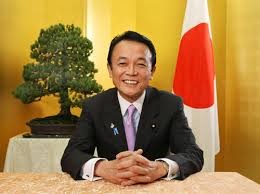
TOKYO: Taro Aso, Japan’s deputy prime minister and finance minister has said that Japan’s public finances are in an “extremely severe” condition. He made his strongest promise yet to raise consumption taxes in April 2017.
The comments highlight how the government of Japan wants to reinforce the credibility of its fiscal policy after postponing last year’s scheduled rise in consumption tax from 8 to 10 per cent. FirstFT is our new essential daily email briefing of the best stories from across the web “Without attaching conditions about the state of the economy, we will certainly raise consumption tax to 10 per cent in April 2017,” Mr Aso told parliament.


Noting that Japan’s public debt was about two times its gross domestic product, Mr Aso said the government would stick to its goal of a primary budget surplus by 2020, and promised a concrete plan for fiscal consolidation this summer. “We must continue to exert maximum effort on both the spending and revenue sides,” he said. According to the International Monetary Fund, Japan had a budget deficit of 7.1 per cent of GDP in 2014. The IMF expects Japan will still be running a deficit of 4.7 per cent in 2019, the largest forecast deficit of any advanced country.
Mr Aso’s remarks came as a string of government ministers addressed parliament to outline their plans for the year. Shinzo Abe, prime minister, promised a year of even stronger reform after winning a snap general election last December. He suggested that there would soon be a deal on the Trans Pacific Partnership trade agreement, noting that talks have entered the final stage, and “at last the end is in sight”.“In conjunction with the US, we are taking a lead in the negotiations, and aiming for an early settlement,” said Mr Abe.,
Japan 2015 budget:
He touted his plans for a sweeping reform of Japan’s agricultural sector. The sector will be especially vulnerable if TPP lowers import duties on food, exposing high-cost Japanese farmers to competition from US and Australian imports.“After the war, our agricultural population was more than 16m people; now it is 2m,” he said. “It has fallen to one in eight, and their average age is greater than 66. It’s past time for a big reform of agriculture.”
Mr Abe recently reached a deal to reduce the power of the Central Union of Agricultural Cooperatives, a vast statutory body that marshals the agricultural lobby, with the goal of giving farmers more say over their own affairs and boosting productivity. The prime minister also called on Japan’s people to debate a change to the war-renouncing constitution. A change is one of Mr Abe’s main political goals, but remains unpopular in opinion polls.