
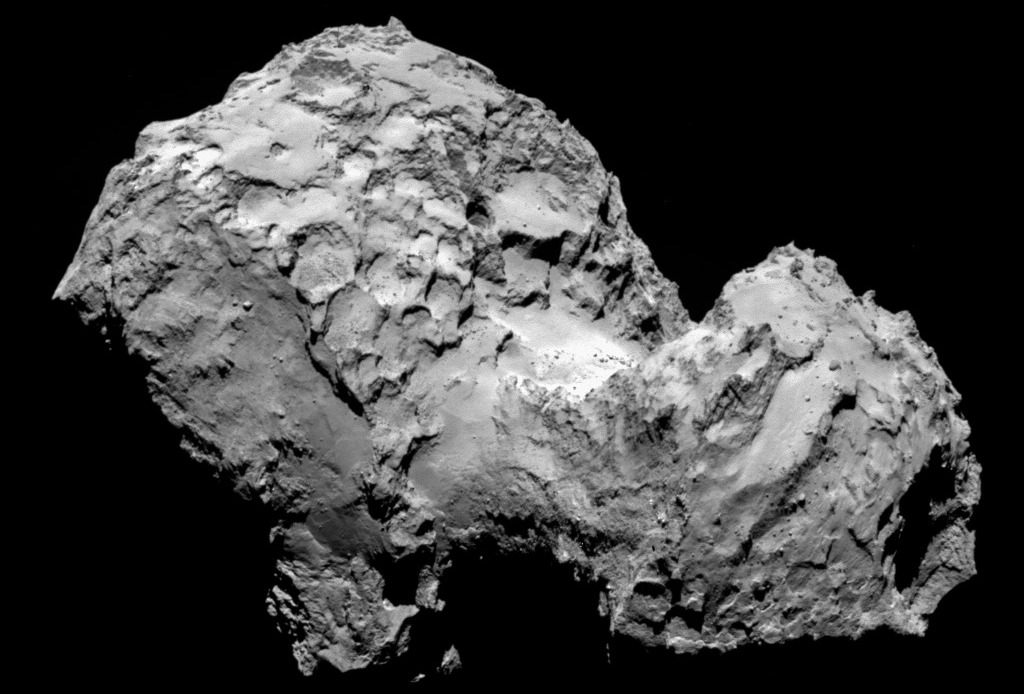


NEW YORK: The Rosetta space probe is scheduled to fly within just 6 kilometres of comet Churyumov–Gerasimenko at 1240 GMT, according to scientists at the European Space Operations Centre (ESOC) in the German city of Darmstadt.
“While closest approach on February 14 is certainly a significant event for science observations, for the flight control team at ESOC, it’s a fairly routine operation and just one more activity during the main science phase,” a statement on ESOC’s website says.
The probe has had to adapt its orbit as the comet’s activity increases, according to Andrea Accomazzo, Rosetta mission director at the umbrella European Space Agency of which ESOC is a part.
The proximity of Saturday’s flyby should allow researchers to gather detailed data about the comet, such as its composition, as some gases and particles may only be accessible close to its surface.
The probe is also expected to take very high resolution pictures of the comet.
Rosetta will not be able to get as close to the surface again. In future, 10 kilometres will be the closest possible approach.
On Friday the space agency reported that the probe was 100 kilometres from the comet.
In November, Rosetta finally reached the comet after a 10-year flight and sent out the smaller probe Philae to take samples directly from its surface.
Philae ran out of power and is located in a dark spot on the comet, so unable to access solar power. Scientists do not know its location.
The ambitious Rosetta mission aims to look back at the very beginnings of the 4.6-billion-year-old solar system by examining dust from its birth stages.

Karachi Port sets 138-year cargo handling record
KARACHI: Pakistan's maritime sector has achieved a major milestone as Karachi Port set a new record in its 138-year history...


