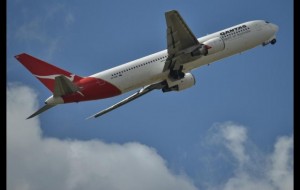
SANTIAGO: Australia has announced that it had renegotiated an air services agreement with Chile, doubling the flight capacity between the two countries to 4,000 seats per week.
The new deal is expected to boost bilateral tourism, enhancing the cooperation between Australian airline Qantas and Chilean airline LAN, which are partners in the one world alliance of international airlines. Their operational systems are already compatible but this new agreement removes all restrictions on code sharing, which was a major hindrance in expanding services beyond the Sydney-to-Santiago route. Now both airlines will have greater flexibility and access to new markets as they build up air links to additional cities in the other’s respective continent.


The air services agreement builds on existing friendly relations between Australia and Chile, two prosperous nations with common interests. Both economies are dominated by mining, with agriculture also playing a significant role. The two countries also share a trade focus on the Asia-Pacific region, with China being the largest trading partner for both. A free trade agreement between Australia and Chile was signed in 2009 and will cover 100% of all goods and services in 2015. Australia became an observer of the pro-business Pacific Alliance (of Mexico, Colombia, Peru, and Chile) in 2012, and both countries are negotiating the U.S.-led Trans-Pacific Partnership free trade bloc. Bilateral trade reached $1.4 billion in 2013, and Chile’s relatively open business environment has led Australian investment there to increase from $2.33 billion in 2011 to $3.09 billion in 2013.
Increasing air connectivity is a key component for boosting international tourism, which spurs economic growth and broadens foreign relations. Australia’s government, businesses, and travelers view Chile as a reliable partner and destination in its own right as well as a gateway to the rest of South America. After Qantas started direct flights from Sydney to Santiago in March 2012, the number of Australian travelers to Chile increased 37% from its 2011 level to 41,459 in 2012. There could very well be a similar jump following this new air agreement. Australia also is a popular destination for Chileans, including for a “work and holiday” visa program that expanded from 100 spots in 2005 to 1,500 currently. Since a more convenient e-visa system for Chilean tourists began in 2011, Australia has become even more of a draw.
This air agreement builds on Australia’s move in January to expand bilateral airline capacity with China, with the same goals of boosting tourism and friendly foreign relations. China is a much larger economic partner for Australia, with bilateral trade of around $130 billion in 2013, and their mutual flow of travelers reflects that. Current capacity will increase in stages from 22,500 to 67,000 per week by October 2016, covering a range of cities in China and Australia. The number of Chinese tourists visiting Australia increased by 16.4% in 2014, and is on track to be the largest group by nationality visiting Australia by 2016. Australia, whose Tourism and Transport Forum chief executive said is “a very aspirational destination” for China’s emerging middle classes, sees a lot of economic benefits from enabling that reality. Further air capacity expansions with other regions are likely to follow suit.