

Customs Today
  • Home
  • Islamabad
  • Karachi
  • Lahore
  • National
  • Transfers and Postings
  • Chambers & Associations
  • Business
No Result
View All Result
Customs Today
  • Home
  • Islamabad
  • Karachi
  • Lahore
  • National
  • Transfers and Postings
  • Chambers & Associations
  • Business
No Result
View All Result
Customs Today
No Result
View All Result
Home Science & Technology Science

Dawn captures sharper images of Ceres from 83,000km distance

byCustoms Today Report
20/02/2015
in Science, Science & Technology
Share on FacebookShare on Twitter

You might also like

Tesla driverless system to use updated radar technology

12/09/2016

Apple to develop its own self-driving technology

10/09/2016

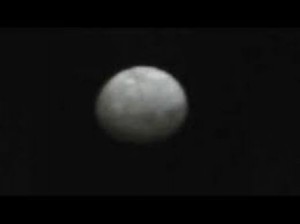
NEW YORK: NASA’s Dawn is on its way towards Ceres and every time it sends back images of the dwarf planet, they keep getting better and better. The latest set of images reveal a lot of craters and mysterious bright spots.
“As we slowly approach the stage, our eyes transfixed on Ceres and her planetary dance, we find she has beguiled us but left us none the wiser,” said Chris Russell, principal investigator of the Dawn mission, based at UCLA. “We expected to be surprised; we did not expect to be this puzzled.”
Dawn captured the new images at a distance of just 83,000 km from the dwarf planet and though the spacecraft is quite far from it, scientists have already been puzzled by the questions that its images bring up. The latest images which have a resolution of 7.8 km per pixel represent the sharpest views of Ceres to date and were captured on February 12.
On March 6, Dawn will be gently captured into Ceres’ orbit. As the spacecraft delivers better images and other data, the science team will be investigating the nature and composition of the dwarf planet, including the nature of the craters and bright spots that are coming into focus.
Dawn has to its credit exploration of a giant asteroid dubbed Vesta for 14 months during 2011 and 2012. Scientists gained numerous insights about the geological history of this body and saw its cratered surface in fine detail.

Related Stories

Tesla driverless system to use updated radar technology

byCT Report
12/09/2016

WASHINGTON: Electric carmaker Tesla announced Sunday it was upgrading its Autopilot software to use more advanced radar technology. In a...

Apple to develop its own self-driving technology

byCT Report
10/09/2016

SAN FRANCISCO: Apple may not become an automaker, but it still wants to develop its own self-driving technology. The iPhone-maker's...

NASA spots slowest known magnetar

byCT Report
10/09/2016

WASHINGTON: Astronomers have found evidence of a magnetar - magnetised neutron star - that spins much slower than the slowest...

‘YouTubers’ outshining old-school television

byCT Report
09/08/2016

SAN FRANCISCO: A media revolution is taking place, and most people over 35 years of age aren’t tuned in. Millennial...

Next Post

Life began on earth may be older than we thought: Study

  • Terms and Conditions
  • Disclaimer

© 2011 Customs Today -World's first newspaper on customs. Customs Today.

No Result
View All Result
  • Transfers and Postings
  • Latest News
  • Karachi
  • Islamabad
  • Lahore
  • National
  • Chambers & Associations
  • Business
  • About Us

© 2011 Customs Today -World's first newspaper on customs. Customs Today.