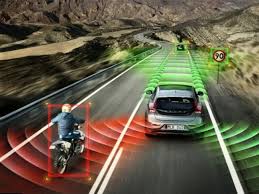
CANBERRA: Volvo aimed to launch 100 self-driving cars by 2017 and to provide people a chance to drive an autopilot car instead of ordinary car. For this purpose Volvo has added hi-tech sensors, leasers and cloud-based positioning system in the car to make it more efficient.
Volvo gave some insights into the technology it will use to integrate self-driving cars into real traffic. The key to success is combining sensors, computers and a chassis system in a clever way,” said Erik Coelingh, a technical specialist at Volvo.
You might also like


The self-driving car will need to know exactly where it is, something Volvo hopes to achieve using an exact positioning system with a complete 360° view of the car’s surroundings. By combining multiple radars, cameras and laser sensors, a network of computers will generate a real-time map of moving and stationary objects near the car. In combination with GPS, the car will know exactly where it is.
Volvo plans to use a tri-focal camera placed behind the upper part of the windscreen to spot objects. It acts like three cameras in one and will provide a broad view to detect cars cutting in from the side. A medium field of view looking straight ahead can be used to follow lane markers on the road and a very narrow long range view can detect debris on the road.
The camera will help the car determine the distance to an object and spot suddenly appearing pedestrians and other unexpected road hazards, Volvo said.
In addition, there will be a forward-looking multiple-beam laser scanner mounted on the front of the car below the air intake. This scanner also has a very wide field of view with a range of 150 meters, helping to distinguish between objects and detecting cars and debris.
Besides looking to the front, Volvo also needs to register what goes on to the side of the car and behind it. To do that, the car has a camera and a medium-range radar mounted at each corner to observe surroundings and to measure the distance to guard rails and to cars in adjacent lanes.
Two long-range radars placed in the rear bumper of the car ensure a good rearward field of view, and twelve ultrasonic sensors around the car are used to identify objects close to the vehicle and support autonomous driving at low speeds.
To deal with that data, the car is fitted with two independent computer systems. If one fails, the other will still have sufficient information to bring the vehicle to a safe stop, Coelingh said, adding that both the brake system and the steering systems have backups.
The cars are also connected to a cloud service at the traffic authorities’ control center via a communication link. That link is used to get the latest map data and traffic information to the car. The cars will prompt drivers to take over from the autopilot in certain circumstances, including extreme weather, malfunction or when they reach the end of a programmed route. If drivers do not respond, the cars will find a safe place to stop.
One of the biggest challenges is to design autopilots that can deal with emergency situations, as the driver cannot be expected to suddenly intervene, Volvo said. Therefore, initially, the cars will drive autonomously on selected roads with suitable conditions, like highways for example without oncoming traffic, cyclists and pedestrians.
By 2017, the public pilot in collaboration with legislators, transport authorities and the city of Gothenburg should be a reality.