NEW YORK: A scientist of University of Colorado has made his contribution to a latest published analysis of data related to an explosion on the surface of the sum more than a year ago that has provided humankind’s first look at the effects of a solar shockwave on Earth’s radiation belts.
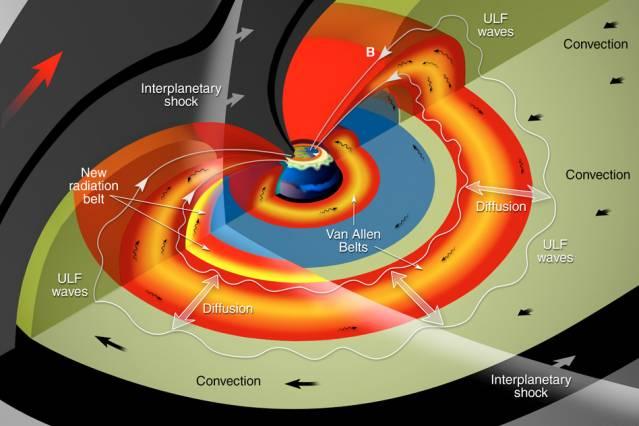
Data on the Oct. 8, 2013, solar blast was gleaned from NASA, twin spacecraft that are orbiting inside the radiation belts deep within the Earth’s magnetic field, which caught the solar shockwave’s effects just before and after it struck.
Dan Baker, director of the Laboratory for Atmospheric and Space Physics at CU, is a co-author of a paper on the study, newly published in the Journal of Geophysical Research.
The shockwave examined in the study roared past Mercury and Venus, then the moon, before streaming toward Earth. It rendered a massive blow to Earth’s magnetic field. That, in turn, triggered a magnetized sound pulse around the planet.
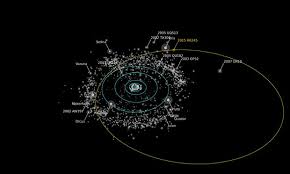
Astronomers discover distant dwarf planet beyond Neptune
LONDON: A dwarf planet half the size of Britain has been found tumbling through space in the most distant reaches...