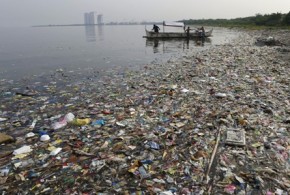


HONG KONG: More than 9 million tons of plastic is expected to end at sea this year and researchers say the trash will likely increase tenfold over the next decade. Now yet another study, which attempts to quantify how much of sea life is impacted by stuff we throw away, says this flotsam is contributing to the potential extinction of some already endangered marine species.
Researchers at Plymouth University in Britain compiled reports from across the globe and found that at least 44,000 animals and organisms have become entangled in, or swallowed marine debris in the past five decades and plastic waste accounted for nearly 92 percent of these cases. They found that 17 percent of all species impacted were listed as threatened or near threatened on the IUCN Red List, including the Hawaiian monk seal, the loggerhead turtle, and sooty shearwater. The findings were published earlier this month in Marine Pollution Bulletin.
“Encounters with marine debris are of particular concern for species that are recognized to be threatened, and with 17 per cent of all species reported in the paper as near threatened, vulnerable, endangered or critically endangered on the IUCN Red List, it is evident that marine debris may be contributing to the potential for species extinction,” the report’s co-author Professor Richard Thompson, one of the world’s leading experts on microplastics in the marine environment, said in a statement.
Thompson and his research partner, Sarah Gall, collated evidence from a wide variety of sources on instances of entanglement, ingestion, physical damage to ecosystems, and rafting — where species are transported by debris. “Reports in the literature began in the 1960s with fatalities being well documented for birds, turtles, fish, and marine mammals,” Gall said.
In total, they found that 693 species had been documented as having encountered debris, with nearly 400 involving entanglement and ingestion. These incidents had occurred around the world, but were most commonly reported off the east and west coasts of North America, as well as Australia and Europe.

Karachi Port sets 138-year cargo handling record
KARACHI: Pakistan's maritime sector has achieved a major milestone as Karachi Port set a new record in its 138-year history...