

TORONTO: The evidence of global warming and climate change is everywhere. Unfortunately, in many cases it may be too late to stop this planetary shift as a catalyst for other ecological changes.
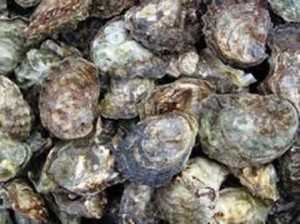
For example, because of pollution our oceans are more acidic. You might not realize it after a day at the beach but the shellfish industry sure has: fisherman have been hauling in “cooked” oysters because the ph level of the world’s oceans has fallen.
Natural Resource Defense Council Senior scientist Lisa Suatoni has co-authored a recent paper describe this circumstance. This report details the importance of sea animals like oysters: “They act as a kidney to our coastal waters,” she said. “We should be investing in a way to do some artificial selection to breed resilient strains of these species. There’s a lot of biological research that could be done to make them less vulnerable.”
Margaret Pilaro Barrette, executive director of the Pacific Coast Shellfish Growers Association, notes, “The oceanographers tell us that even if we were to stop all of our carbon inputs to the atmosphere and ocean, if we were to turn off that spigot today, we’d still have 50 years of questionable water to deal with. We can learn to adapt to that. The problem is, we don’t know what else is around the corner.”
And the impact this could have: “Our analysis shows acidification will harm more than ocean creatures; it will have real impacts on people’s lives. It will pinch pocketbooks, it will put livelihoods at risk, and it will alter the fabric of communities all across the country. The mid-Atlantic and the Northeast make a ton of money off vulnerable species. They have a lot to lose.”
Suatoni describes what can be done: “There is plenty we can do to help these at-risk communities while protecting our environment. Tailored action plans should be developed for each ocean acidification hot zone. The time to act is now.”

Karachi Port sets 138-year cargo handling record
KARACHI: Pakistan's maritime sector has achieved a major milestone as Karachi Port set a new record in its 138-year history...