

Customs Today
  • Home
  • Islamabad
  • Karachi
  • Lahore
  • National
  • Transfers and Postings
  • Chambers & Associations
  • Business
No Result
View All Result
Customs Today
  • Home
  • Islamabad
  • Karachi
  • Lahore
  • National
  • Transfers and Postings
  • Chambers & Associations
  • Business
No Result
View All Result
Customs Today
No Result
View All Result
Home Uncategorized

NASA’s Chandra X-ray observatory finds intriguing member of black hole family tree

byCustoms Today Report
26/02/2015
in Uncategorized
Share on FacebookShare on Twitter

You might also like

Pakistan to get $3b loan from Islamic Trade Financing Corporation

20/10/2024

Lahore I&I & Enforcement anti-smuggling operations achieve record success in early FY 2024-25

10/09/2024

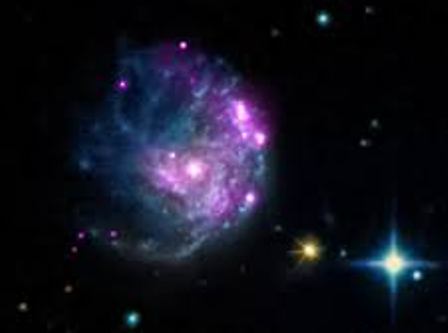
HONG KONG: Astronomers using NASA’s Chandra X-ray Observatory have discovered an intriguing cosmic object that may help provide answers to some long-standing questions about how black holes evolve and influence their surroundings.
The object, called NGC2276-3c, is located in an arm of the spiral galaxy NGC 2276-3c which is about 100 million light years from the Earth.
“Astronomers have been looking very hard for these medium-sized black holes. There have been hints that they exist, but the IMBHs have been acting like a long-lost relative that is not interested in being found,” said study co-author Tim Roberts from the University of Durham in Britain.
Like paleontology, “we often have to ‘dig’ up our discoveries in galaxies that are millions of light years away”, added Mar Mezcua from the Harvard-Smithsonian Centre for Astrophysics who led the study.
For many years, scientists have found conclusive evidence for smaller black holes that contain about five to 30 times the mass of the sun.
There is also a lot of information about so-called supermassive holes that reside at the centre of galaxies and weigh million or even billion times the Sun’s mass.
As their name suggests, IMBHs represent a class of black holes that fall in between these two well-established groups, with masses in the range of a few hundred to a few hundred thousand solar masses.
One reason that IMBHs are important is that they could be the seeds from which supermassive black holes formed in the early universe.
“We found that NGC2276-3c has traits similar to both stellar-mass black holes and supermassive black holes,” said co-author Andrei Lobanov of the Max Planck Institute for Radio Astronomy in Bonn, Germany.


Tags: Andrei Lobanovblack hole family treeintriguing memberNASA’s Chandra X-ray observatoryUniversity of Durham in Britain

Related Stories

Pakistan to get $3b loan from Islamic Trade Financing Corporation

byCT Report
20/10/2024

ISLAMABAD: Islamic Trade Financing Corporation (ITFC) to provide Pakistan with a $3 billion loan, according to an official statement released...

Lahore I&I & Enforcement anti-smuggling operations achieve record success in early FY 2024-25

byCT Report
10/09/2024

LAHORE:  Regional Directorate of Customs Intelligence & Investigation has demonstrated exceptional performance in the first two months of the fiscal...

ICCI and CDA to join hands for tree plantation drive in Capital

byQaisar Mansoor
09/08/2023

ISLAMABAD: Islamabad Chamber of Commerce and Industry (ICCI) in collaboration with the Capital Development Authority (CDA) would jointly launch a...

Customs Officials Yawar Abbas & Tariq Mehmood kidnapped in Karachi

byCT Report
08/07/2023

KARACHI: Customs Intelligence Officer Yawar Abbas and Customs Preventive Officer Tariq Mehmood who were working against smuggling were kidnapped by...

Next Post

Ruble weakens 1.5% against dollar

  • Terms and Conditions
  • Disclaimer

© 2011 Customs Today -World's first newspaper on customs. Customs Today.

No Result
View All Result
  • Transfers and Postings
  • Latest News
  • Karachi
  • Islamabad
  • Lahore
  • National
  • Chambers & Associations
  • Business
  • About Us

© 2011 Customs Today -World's first newspaper on customs. Customs Today.