

Customs Today
  • Home
  • Islamabad
  • Karachi
  • Lahore
  • National
  • Transfers and Postings
  • Chambers & Associations
  • Business
No Result
View All Result
Customs Today
  • Home
  • Islamabad
  • Karachi
  • Lahore
  • National
  • Transfers and Postings
  • Chambers & Associations
  • Business
No Result
View All Result
Customs Today
No Result
View All Result
Home Science & Technology Science

Earth-sized water worlds could host life

byCustoms Today Report
03/03/2015
in Science, Science & Technology
Share on FacebookShare on Twitter

You might also like

Tesla driverless system to use updated radar technology

12/09/2016

Apple to develop its own self-driving technology

10/09/2016

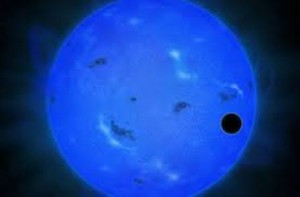
WASHINGTON: Although water is one of the key ingredients scientists look for when considering if a planet is habitable or not, other factors, such as the planet’s distance from its star and its tilt, play an important part in the likelihood of a planet containing life.
However, the definition of habitable planet just got a little looser thanks to new research done by MIT scientists that shows that planets covered completely in water within their star’s habitable zone could still contain life, even if the tilt of its axis is completely off as long as the planet’s water depth was at least 165 feet deep.
When we consider potentially habitable planets, our usual assumption is that these planets live within the habitable zone of their stars. This is that place in orbit that’s not too close and not too far from the star so that liquid water can form on the planet’s surface. However, other forces play a part in life appearing on a planet, including size. A planet that’s too big has too much gaseous pressure. A planet that’s too small has too little gravity to keep an atmosphere. So most often, what we look for are planets the same size as Earth.
Of course, the presence of water, particularly in oceans, is also important. Oceans help regulate the temperature of planets, at least as long as there’s enough water in them.
The MIT scientists started with these concepts and used an Earth-sized planet in their simulation at the exact same distance from its star as the Earth is from the sun. They did, however, change two key factors water covered their planet and its axis was tilted so far that it rotated on its side.

Related Stories

Tesla driverless system to use updated radar technology

byCT Report
12/09/2016

WASHINGTON: Electric carmaker Tesla announced Sunday it was upgrading its Autopilot software to use more advanced radar technology. In a...

Apple to develop its own self-driving technology

byCT Report
10/09/2016

SAN FRANCISCO: Apple may not become an automaker, but it still wants to develop its own self-driving technology. The iPhone-maker's...

NASA spots slowest known magnetar

byCT Report
10/09/2016

WASHINGTON: Astronomers have found evidence of a magnetar - magnetised neutron star - that spins much slower than the slowest...

‘YouTubers’ outshining old-school television

byCT Report
09/08/2016

SAN FRANCISCO: A media revolution is taking place, and most people over 35 years of age aren’t tuned in. Millennial...

Next Post

Japanese shipping, delivery firms thrust services overseas to challenge European, US giants

  • Terms and Conditions
  • Disclaimer

© 2011 Customs Today -World's first newspaper on customs. Customs Today.

No Result
View All Result
  • Transfers and Postings
  • Latest News
  • Karachi
  • Islamabad
  • Lahore
  • National
  • Chambers & Associations
  • Business
  • About Us

© 2011 Customs Today -World's first newspaper on customs. Customs Today.