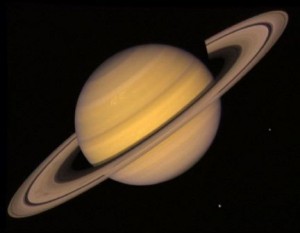


VANCOUVER: Scientists have been working out to understand if life could have survived amidst Titan’s methane-based lakes. Titan is the biggest moon of Saturn. After several experiments, they got to know that Titan can support life but it won’t be like the Earth’s. Titan has islands, mountains, storms and lakes but no oxygen so an oxygen-free and methane-based life can surely exist on the planet and that could be very much crucial to support life existence.
“We didn’t come in with any preconceptions about what should be in a membrane and what shouldn’t. We just worked with the compounds that, we knew were there and asked, ‘If this was your palette, what can you make out of that’,” said lead researcher Paulette Clancy.
“We’re not biologists, and we’re not astronomers, but we had the right tools. Perhaps it helped, because we didn’t come in with any preconceptions about what should be in a membrane and what shouldn’t. We just worked with the compounds that we knew were there and asked, ‘If this was your palette, what can you make out of that,’” said Clancy in a statement.
The prepared statement said, “We employed a molecular dynamics method that screened for candidate compounds from methane for self-assembly into membrane-like structures. The most promising compound they found is an acrylonitrile azotosome, which showed good stability, a strong barrier to decomposition, and a flexibility similar to that of phospholipid membranes on Earth. Acrylonitrile – a colorless, poisonous, liquid organic compound used in the manufacture of acrylic fibers, resins and thermoplastics – is present in Titan’s atmosphere.”

Karachi Port sets 138-year cargo handling record
KARACHI: Pakistan's maritime sector has achieved a major milestone as Karachi Port set a new record in its 138-year history...