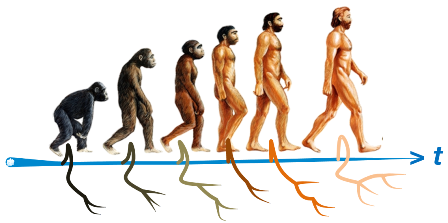
NEW YORK: The genetic mechanisms attributable to developmental changes responsible for advanced human cognition remain poorly understood. However, researchers from the Yale School of Medicine have data they believe may shed new light on human brain evolution. The scientists revealed that thousands of genetic regulatory elements, acting like “dimmer” switches, were turned up during human evolution driving the development of the human cerebral cortex.
The investigators used comparative epigenetic profiling of human, rhesus macaque monkeys, and mouse corticogenesis in order to identify promoters and enhancers that have improved activity in humans. The findings from this study were published today in Science through an article entitled “Evolutionary changes in promoter and enhancer activity during human corticogenesis”.
In comparison to rhesus monkeys and mice, the Yale team found evidence of the genetic switches being turned up in humans, which they hypothesize drove the expression of genes within the cerebral cortex, the region of the brain most involved in consciousness and language. This could be a key element in understanding why the structure and function of this brain region is so unique in humans.
You might also like


“Building a more complex cortex likely involves several things: making more cells, modifying the functions of cortical areas, and changing the connections neurons make with each other. And the regulatory changes we found in humans are associated with those processes,” said James Noonan, Ph.D., associate professor of genetics at Yale, investigator with the Kavli Institute for Neuroscience, and senior author on the study. “This likely involves evolutionary modifications to cellular proliferation, cortical patterning, and other developmental processes that are generally well conserved across many species.”
With sequencing techniques becoming faster and more cost effective, scientists have become increasingly proficient at comparative genome analysis. However, since human and primate genomes are remarkably similar, Dr. Noonan and his team theorized that the manner in which genes were regulated is what set human neuronal evolution apart.