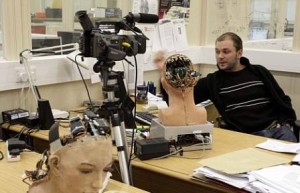


NEW YORK: Creating robots that see like human beings is the lofty vision of a new research centre opening at the Queensland University of Technology (QUT) in Brisbane.
The Australian Centre for Robotic Vision (ACRV) was conceived by Professor Peter Corke in October 2012 as a way of taking robots off the factory floor and into the real world. The ACRV itself went from vision to reality with $25 million in federal funding.
Professor Corke said he hoped to breathe life into the sorts of robots that until now had been the realm of science fiction. “When most people think about robots there are two dichotomous views,” he said. “We have the wicked-smart robots that we see in science fiction movies – they perhaps look like us, they’re humanoid in shape, they’re very smart and very intelligent. But at the moment that is still the realm of fiction.” In real life, robots are mostly limited to the manufacturing industry; building cars and electronics and working in environments where human beings are absent.
“The challenge really for robots is how do we get them to move out of those very highly structured and organised work environments that they have in factories,” Professor Corke said. “There is a new generation of robots coming that can see, that are visually enabled and have hand-eye coordination skills like we use many, many times a day without even thinking about it. “Our eyes are perhaps one of the most important senses that we have. Robots at the moment do not have that sense. “It’s the goal of our research centre to create this sense of vision for robots that will enable them to see like we do.”

Karachi Port sets 138-year cargo handling record
KARACHI: Pakistan's maritime sector has achieved a major milestone as Karachi Port set a new record in its 138-year history...