COLOMBO: People adapted to living in tropical rainforests thousands of years earlier than previously known, according to scientists who found crucial evidence in 20,000-year-old fossilised human teeth discovered in Sri Lanka.
The researchers said there has been a debate over when our species first began living in rainforests, with some experts arguing such habitats may have been too daunting for early human hunter-gatherers.

In a study published in the journal Science, the scientists examined teeth from 26 people found at various archaeological sites in Sri Lanka for evidence of whether their diet consisted of rainforest plants and animals.
They obtained small tooth enamel samples using a diamond-tipped drill and analysed them with an instrument called a mass spectrometer.
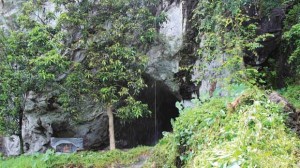
Almost all the teeth, including the oldest ones from about 20,000 years ago found at the Batadomba-lena rock-shelter in southwestern Sri Lanka, indicated a diet primarily of food from the rainforest.
“Humans have been manipulating and living within dynamic rainforest environments for at least 20,000 years and probably even longer,” said University of Oxford archaeologist Patrick Roberts, who studies early human adaptations.
“The lifestyle, as we can see, was dedicated rainforest subsistence,” Roberts added.
Scientists previously had not found direct evidence of human occupation of rainforest regions before about 10,000 years ago. Compared to open habitats, rainforests present difficulties such as dense vegetation that makes it tough to get around, small, nimble and often arboreal prey animals and a bewildering array of plants and fruit, including poisonous ones.
“However, it is clear that hunting and gathering communities in Sri Lanka figured out how to adapt to such settings,” said Oxford archaeologist Mike Petraglia, another of the researchers.
The researchers said these people hunted monkeys, giant squirrels, mouse deer, porcupines and other mammals, as well as freshwater and forest snails, while also eating nuts and starchy rainforest plants.
“These results further the picture that our species was incredibly adaptive, and it is arguably this that made us the first species to expand across the diversity of the globe’s ecologies and environments,” Roberts said.
While the study provides the earliest direct evidence for human reliance on rainforest resources, the researchers said other evidence suggests people may have taken to Sri Lanka’s rainforests as early as 38,000 years ago.
Roberts said archaeological work in Africa, Southeast Asia and Melanesia also suggests humans may have used rainforest resources at least 45,000 years ago.