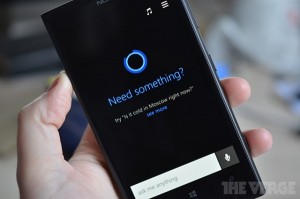
NEW YORK: Microsoft has incorporated Cortana into its Windows 10 operating system, which will be coming to PCs in the latter part of this year. Microsoft do not confined the Cortana to Windows only, but it is also busy in making a iOS and Android based system which will release after the release of Cortana for Windows 10.
It would be a standalone app, available in the Google Play marketplace and Apple App Store, and work just as it already does on Windows Phone, according to the report.


Microsoft also is working toward a more advanced version of Cortana, drawing from a research project called Einstein. “This kind of technology, which can read and understand email, will play a central role in the next rollout of Cortana, which we are working on now for the fall time frame,” Eric Horvitz, Microsoft Research managing director, told Reuters in an interview.
The move to make Cortana a standalone app available to users of devices running Apple’s iOS software and those running Google’s Android would come sometime after that, Reuters said.
Microsoft did not respond to a request for comment.
Cortana is Microsoft’s answer to Apple’s Siri, though it arguably takes the features one step further. While Siri is designed to answer queries, such as finding directions to a destination, or to handle tasks like setting up a reminder or calendar event, Cortana can do that plus provide notifications and updates where applicable. So in the event you have a flight on your calendar, Cortana will alert you when to leave for the airport.
The name Cortana comes from Microsoft-owned game franchise Halo. Cortana is the artificial intelligence presence in Halo that provides players with help and insight as they play through the shoot-em-up.
If Microsoft brings Cortana to other platforms, that would represent an important break in strategy for the current crop of voice-activated virtual assistants. Apple’s Siri is exclusive to iOS, and given the company’s penchant for controlling its own software, will likely never make its way to another platform. Google has its own personal assistant, Google Now, which is only available on Android.
Last year, when CEO Satya Nadella laid out his vision for Microsoft, he made clear that mobile would play a central role in his strategy. He also indicated that he would not be as beholden to his company’s own platforms as Microsoft has been in the past, signaling that supporting other operating systems, like iOS and Android, would not only be possible, but necessary. Nadella’s vision is to target and attract users wherever they are, and not necessarily force them to use his company’s software on products it controls.
That is evidenced by Microsoft Office applications, which are available on other mobile platforms, including on Apple’s iOS. Now with Cortana possibly following that lead, Microsoft can make good on his promise again.
Still, Nadella’s strategy to bring his company’s applications to users is driven by a desire to get more people to use Microsoft’s services. When you ask Cortana to search the Web, for example, it uses Microsoft’s Bing search engine. It’s unlikely that will change if Cortana comes to iOS and Android.