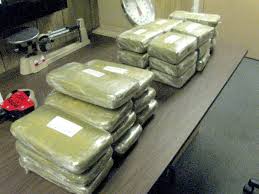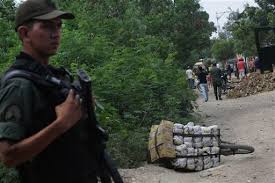
CARACAS: The edge of this city near Venezuela’s western border, the load of valuable contraband sits in boxes ready to be shuttled the few kilometres into Colombia where it will fetch an impressive profit.
The next one could be tomato sauce, toothpaste, flour or shaving blades whatever the band of smugglers is able to buy cheaply at Venezuela’s controlled prices and then ship out for resale.


“Moving a shipment of milk is more profitable than cocaine,” said the smuggler. He declined to be named out of fear of arrest.
While Venezuela struggles to right its listing economy and urban shoppers form lines around stores in search of basic goods, the smuggling business is booming.
A kilogram of rice sold in Caracas at the Fair Price Regulator’s mandated price of 26 bolivars, the equivalent of 10 US cents at the widely used black market rate, can garner 15 times that amount in Colombia. Toothpaste goes for 27 times as much. A gallon of gasoline costs less than a penny in Venezuela compared to as much as $3 across the border.
The government complains the smuggling of between 50,000 and 100,000 barrels per day of gasoline alone represents losses of more than $3 billion a year, or about 1.5 per cent of GDP if taken into account what the same volume costs at international prices.
“It’s the problem we have for living in the cheapest country in the world,” Jose Gregorio Vielma Mora, the pro-government governor of Tachira state, said. “At least 30 per cent of the food Venezuela produces leaves the country illegally.”
Venezuela established price controls a decade ago but the country’s oil-dependent economy has been battered by mismanagement and the crash in global crude prices, creating a cash shortage that has made it difficult to buy imported goods.
Hard currency has become the country’s most sought-after commodity and the profits to be found in smuggling are proving irresistible.
The government has intensified its fight against the flow of contraband, creating a special task force to bring control to the porous 2,200-kilometre border with Colombia.
Steps include closing the border at night, deploying more troops and ramping up sentences for anyone caught smuggling. The government also has begun rolling out fingerprint scanners to ration what shoppers can buy. In the last six months, authorities have seized some 11,000 tonnes of smuggled products ranging from fertilizer to animal feed and mayonnaise, according to Gen. Efrain Velasco, Venezuela’s top officer along the border.
But the trade continues at a brisk pace, in part due to systemic corruption among Venezuela’s poorly paid security forces.
The smuggler in San Cristobal describes how an advance car travels a few minutes ahead of the cargo, doling out bribes at each of 20 military checkpoints along the highway.
On the 650-kilometre journey, he pays a total of about 80,000 bolivars, or around $300 US.
A few blocks before the custom house, a dirt trail heads off into a green scrubland. From this point, it’s a 15-minute drive across the shallow Tachira River into Colombia and a dusty barrio known as La Parada where dozens of merchants from all over Colombia pore over all sorts of smuggled goods laid out in the streets and on plastic tables.