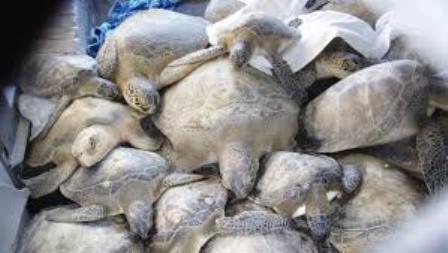


KARACHI: An interview-based survey whose findings were shared during the proceedings of a regional symposium showed a massive bycatch problem in Pakistan with the shrimp fishery and turtles getting incidentally caught and killed in huge numbers annually.
Titled Sea Turtle Conservation in Asia, the two-day event was organised by the International Union for Conservation of Nature (IUCN) as part of its USAID-funded Saving the Endangered Sea Turtle project.
Giving a presentation on TED (turtle excluder device) trial monitoring and estimation of sea turtles mortality along the coast of Pakistan, Dr Nicolas J. Pilcher, the co-chair of the IUCN Marine Turtle Specialist Group and executive director of the Marine Research Foundation, said that Pakistan was a registered TED user nation with the US Department of State, but the implementation of TED regulations had been scarce for many years.
Assisted by local experts, Dr Pilcher carried out a baseline study last year to asses current state of the fishery, the rate of turtle bycatch and TEDs uptake. About 300 fishermen targeting shrimp and fish were interviewed.
“The results depicted a clear reliance on shrimp fishing by a majority of respondents who used trawl nets primarily but occasionally used other gears. The key concern with nets was the use of extremely small mesh sizes [less than a half centimetre],” he said.
According to the study findings, 87 per cent of fishers reported catching turtles accidentally in their nets last year. Most of them reported to have caught one turtle, but their number could exceed 10 turtles per boat per year. Green and olive Ridley turtles made up the bulk of the bycatch, but the catch of loggerheads and occasional bycatch of leatherback were also reported.
“When these values are extrapolated fishery-wide, they could account for 1,817 to 2,381 turtle deaths in the last year alone,” he said.

Karachi Port sets 138-year cargo handling record
KARACHI: Pakistan's maritime sector has achieved a major milestone as Karachi Port set a new record in its 138-year history...