

Customs Today
  • Home
  • Islamabad
  • Karachi
  • Lahore
  • National
  • Transfers and Postings
  • Chambers & Associations
  • Business
No Result
View All Result
Customs Today
  • Home
  • Islamabad
  • Karachi
  • Lahore
  • National
  • Transfers and Postings
  • Chambers & Associations
  • Business
No Result
View All Result
Customs Today
No Result
View All Result
Home Science & Technology Science

Bionic ants, butterflies produced on 3D printer as beautiful as real ones

byCustoms Today Report
30/03/2015
in Science, Science & Technology
Share on FacebookShare on Twitter

You might also like

Tesla driverless system to use updated radar technology

12/09/2016

Apple to develop its own self-driving technology

10/09/2016

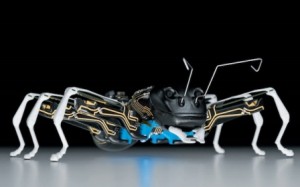
NEW YORK: Bionic ants and butterflies produced on a 3D printer are just as beautiful and industrious as their counterparts in the natural world.
Research efforts into minitaurization, practical adaptation of nature’s tactics and functional integration with technology by the Bionic Learning Network will be showcased. The research network links German electronics company Festo to universities, institutes, development companies and private inventors as they seek creative solutions and test new technologies and production methods.
BionicANTs borrow not just from the physical characteristics of ants, but the design also incorporates many of the behavioral features of the highly social insects. The insect-inspired devices are slightly over 5 inches long and weigh just over 1 ounce each.
The artificial ants are created on a 3D printer, forming both the basic structure of the device and electrical connections in a single pass. Each artificial ant is equipped with a small video camera, providing a sense of “sight” for the robotic insects. The robotic insects recharge their internal batteries by placing their antennae against a charging station.
Piezo technology is used to drive bending actuators in the devices, which provide the joints within limbs, allowing the device to propel itself along surfaces. This system also uses little electricity, essential for operating time of the robots.
Autonomous Networking Technologies (ANTs) carry out collective activities in much the same ways as their counterparts in the natural world. The ants use a wireless signal to communicate with each other to carry out their tasks.

Related Stories

Tesla driverless system to use updated radar technology

byCT Report
12/09/2016

WASHINGTON: Electric carmaker Tesla announced Sunday it was upgrading its Autopilot software to use more advanced radar technology. In a...

Apple to develop its own self-driving technology

byCT Report
10/09/2016

SAN FRANCISCO: Apple may not become an automaker, but it still wants to develop its own self-driving technology. The iPhone-maker's...

NASA spots slowest known magnetar

byCT Report
10/09/2016

WASHINGTON: Astronomers have found evidence of a magnetar - magnetised neutron star - that spins much slower than the slowest...

‘YouTubers’ outshining old-school television

byCT Report
09/08/2016

SAN FRANCISCO: A media revolution is taking place, and most people over 35 years of age aren’t tuned in. Millennial...

Next Post

$4.862b worth of import, export goods transported by China-Europe Trains in 2014

  • Terms and Conditions
  • Disclaimer

© 2011 Customs Today -World's first newspaper on customs. Customs Today.

No Result
View All Result
  • Transfers and Postings
  • Latest News
  • Karachi
  • Islamabad
  • Lahore
  • National
  • Chambers & Associations
  • Business
  • About Us

© 2011 Customs Today -World's first newspaper on customs. Customs Today.