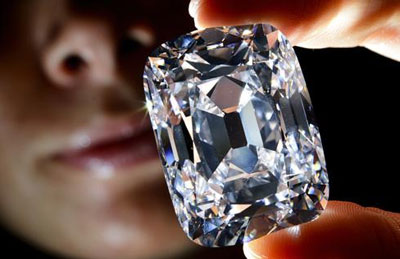
SINGAPORE: Singapore-based IIa Technologies opened the world’s largest diamond ‘greenhouse’ in the country, a state-of-the-art laboratory which makes diamonds that cost about 40 per cent less than natural mined diamonds, but with none of the environmental or ethical controversies that surround the precious stones.
Located in the city-state’s Tukang Innovation Drive industrial area, the new 200,000-square-foot facility houses about 200 diamond greenhouse machines that use a revolutionary method known as Microwave Plasma Chemical Vapour Deposition (MPCVD) to grow Type IIa diamonds, the purest diamond that can be found underground.
You might also like


The facility aims to fill the widening gap between global demand for diamonds and available supply from mines, as well as open up new possibilities for the use of diamonds in high-technology applications in precision engineering, optics, healthcare, and electronics manufacturing, among others.
Vishal Mehta, chief executive officer of IIa Technologies, predicted that the supply of grown diamonds will be in high demand among jewellers and technology businesses, thanks to growing demand from industries and increasingly affluent consumers in countries such as India and China.
Bridging the supply gap sustainably
Global diamond supply has been constantly declining in the past decade, and several key mines have passed their peak production levels. Global consultancy Frost and Sullivan in a recent report found that the global supply of mined rough diamonds could fall from 134 million carats in 2014 to 14 million carats by 2050.
Demand is expected to rise to 292 million carats, leading to a potential supply gap of 278 million carats by 2050.
Lab-grown diamonds could have a major role in addressing this shortage. Frost and Sullivan predicts that grown diamond production will exceed 200 million carats by 2050, with about 55 million carats being used as gems, and 150 million carats being used in hi-tech applications.
A comparison of the environmental and social impact of grown and natural diamonds. Image: IIa Technologies
Grown diamonds also have less than one-seventh of the impact of mined diamonds when factors such as carbon emissions, energy usage, land disturbance, and occupational hazards are taken into account, Frost and Sullivan found.
The human rights controversies surrounding mined diamonds, such as the use of ‘blood diamonds’ to fund conflicts, poor or violent working conditions for miners and the use of child labour in mines also do not apply to diamonds that are grown in laboratories, says IIa Technologies.
“We bring a sustainable source of rough diamonds to both traditional and next generation applications,” said Mehta, who also announced the launch of a new Centre of Excellence which will conduct research on how diamonds can be used in industry, and on improving the company’s diamond production method MPCVD.
The method, developed by Indian professor Devi Shanker Misra, who is now IIa Technologies’ chief technical officer, involves placing diamond ‘seeds’ – thin, square diamond wafers that are up to 11 millimeters wide – in a chamber which is filled with hydrogen and methane gases.
Microwave energy ignites the hydrogen into a high-energy ball of plasma, which hovers above the seed and heats up the methane, which is made up of hydrogen and carbon. The heat causes the carbon atoms in the methane to ‘rain’ onto the seed and form a diamond crystal.
This process takes between 10 and 12 weeks, at the end of which a rough grown diamond is sent for cutting and polishing.
IIa Technologies produced about 300,000 carats of grown diamonds last year, says Mehta.