

Customs Today
  • Home
  • Islamabad
  • Karachi
  • Lahore
  • National
  • Transfers and Postings
  • Chambers & Associations
  • Business
No Result
View All Result
Customs Today
  • Home
  • Islamabad
  • Karachi
  • Lahore
  • National
  • Transfers and Postings
  • Chambers & Associations
  • Business
No Result
View All Result
Customs Today
No Result
View All Result
Home Science & Technology Science

UCSD researchers study effects of long-term space travel on humans

byCustoms Today Report
01/04/2015
in Science, Science & Technology
Share on FacebookShare on Twitter

You might also like

Tesla driverless system to use updated radar technology

12/09/2016

Apple to develop its own self-driving technology

10/09/2016

BRENT: The launch of the Russian Soyuz spacecraft Friday was of particular interest to some UC San Diego researchers studying the effects of long-term space travel on humans.
“We have been preparing for the launch for over a year, so this is a very exciting time for us,” said Prof. Brinda Rana, of UCSD’s School of Medicine.
The researchers held a launch-watching party on campus, celebrating with borscht, catered from the Pomegranate Russian Restaurant, Champagne and MoonPies.
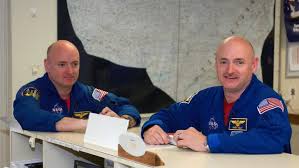
Rana is a key player in two of 10 health studies that NASA commissioned to co-monitor American Astronaut Scott Kelly in space and his identical twin brother, retired astronaut Mark Kelly, on the ground.
Mark, who completed four missions and a total of 54 days in space, is the husband of former Congresswoman Gabby Giffords, who suffered a traumatic brain injury when she was nearly assassinated in 2011.
Rana is leading a study to determine how long-term space flight affects fluid pressure in the brain and its impact on vision during and after space travel.
She explains that gravity pulls body fluids downward on Earth, but in space, the fluids flow up toward the head, with the potential to cause pressure on the brain and permanent ocular changes
UCSD’s study of the body’s fluid regulation and proteins involved in space flight adaptation “may shed light on potential new treatments for traumatic brain injury, glaucoma and ‘water on the brain,’” Rana said. Her UCSD co-investigators are Hemal Patel, Alan Hargens and Brandon Macias.

Related Stories

Tesla driverless system to use updated radar technology

byCT Report
12/09/2016

WASHINGTON: Electric carmaker Tesla announced Sunday it was upgrading its Autopilot software to use more advanced radar technology. In a...

Apple to develop its own self-driving technology

byCT Report
10/09/2016

SAN FRANCISCO: Apple may not become an automaker, but it still wants to develop its own self-driving technology. The iPhone-maker's...

NASA spots slowest known magnetar

byCT Report
10/09/2016

WASHINGTON: Astronomers have found evidence of a magnetar - magnetised neutron star - that spins much slower than the slowest...

‘YouTubers’ outshining old-school television

byCT Report
09/08/2016

SAN FRANCISCO: A media revolution is taking place, and most people over 35 years of age aren’t tuned in. Millennial...

Next Post

Russian cosmonauts used tablet computer in space for 1st time

  • Terms and Conditions
  • Disclaimer

© 2011 Customs Today -World's first newspaper on customs. Customs Today.

No Result
View All Result
  • Transfers and Postings
  • Latest News
  • Karachi
  • Islamabad
  • Lahore
  • National
  • Chambers & Associations
  • Business
  • About Us

© 2011 Customs Today -World's first newspaper on customs. Customs Today.