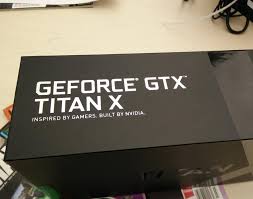
TOKYO: Nvidia GeForce TITAN X is expected to be powered by the fully-fledged GM200 graphics processing unit with 3072 stream processors, 192 texture mapping units, 96 raster operations pipelines as well as 384-bit memory interface. The main difference between the GeForce GTX TITAN X and the GeForce GTX TITAN X is expected to be the size of frame-buffer: 6GB of GDDR5 on the GTX 980 Ti vs. 12GB on the GTX Titan X.
NVIDIA’s GeForce GTX TITAN X is the world’s latest fastest single GPU solution. But does that mean we should just leave it alone, and ignore its true potential? We could, but that’d be boring – so join us as we take a look at the TITAN X from an overclocking perspective, and provide some ‘Best Playable’ results for good measure.
You might also like


When we posted look at NVIDIA’s GeForce GTX TITAN X at its launch last month, there were a couple of tests I had to skip over due to a lack of time, one of which was overclocking. As it is now, though, I have to admit that I’m glad I waited, as it’s allowed me to spend a lot more time to find that “perfect” overclock.
Alright – so a “perfect” overclock doesn’t actually exist. “Great” ones do, though. I’m not talking about those sorts of overclocks that break records, but 100% stable overclocks that prove genuinely worthwhile – those that can add at least 10% to the performance.