ISLAMABAD: International Monetary Fund (IMF) said on Wednesday that Pakistan has succeeded in stabilizing its economy, but steady implementation of reforms would be vital if the country hoped to find a place among the world’s fast-growing emerging markets.
A latest statement cum interview of Jeffrey Franks, the IMF’s outgoing mission chief for Pakistan said that the balance of payments crisis averted, growth rebounding Energy subsidy, tax reforms yielding results Country must stay the course with reforms for sustained growth to take hold Pakistan has succeeded in stabilizing its economy, but steady implementation of reforms will be vital if the country hopes to find a place among the world’s fast-growing emerging markets.
You might also like


The IMF’s Executive Board approved the latest disbursement under a 36-month IMF-supported loan on March 27 based on the solid progress made to date on Pakistan’s economic reform agenda.
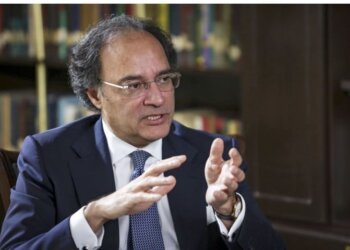
Jeffrey Franks discussed the country’s achievements at the program’s halfway mark and the considerable work that remains for the country to achieve a true economic transformation.
Franks is leaving the Pakistan assignment to become Director of the IMF’s Offices in Europe.
Harald Finger of the IMF’s Middle East and Central Asia Department has been appointed as his replacement.
Franks while updating on Pakistan’s economy said that Pakistan has made good progress.
He added that when the country approached the IMF for support in 2013, it was on the verge of a balance-of-payments crisis, and that crisis has been averted.
Franks said that reserves at the State Bank of Pakistan, which had declined to perilously low levels, are now rebounding.
The fiscal deficit, which, he said was extremely large at over 8 percent of GDP in 2012-13, is on track this year to get down below 5 percent of GDP.
He further said that the economy grew about 4 percent last year, and we’re expecting a similar figure this year adding that’s a good performance considering the country was carrying out major fiscal consolidation.
“But it’s not enough to substantially improve income levels because of the high population growth rate”, he observed.
In terms of Pakistan achievement of structural reforms,Franks said that among the key achievements was tackling costly and inefficient electricity subsidies.
He added that those subsidies have come down from almost 2 percent of GDP to 0.7 percent of GDP this year, and they are expected to fall to 0.3 next year.
This reduction in subsidies, he said was accompanied by measures to protect the poor.