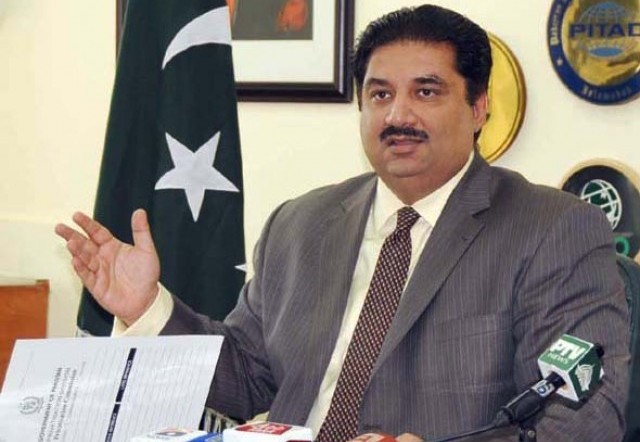
Khurram Dastgir likely to visit Afghanistan next week
ISLAMABAD: The irritants and impediments in the smooth functioning of the Afghanistan-Pakistan Transit Trade Agreement (APTTA) as well as proposed Pakistan-Afghanistan-Tajikistan Trilateral Transit Agreement (PATTTTA) are likely to dominate the discussions of the commerce minister with Afghan authorities during his upcoming visit to Afghanistan.
“Minister for Commerce Khurram Dastgir is scheduled to pay a daylong or two-day visit to Afghanistan on April 19 or 20,” a well-placed source at the Ministry of Commerce (MoC) informed this scribe.


Prior to leaving for Afghanistan, the commerce minister will get an updated report about the outcomes of trilateral negotiations held in Dushanbe on Pakistan-Afghanistan-Tajikistan Trilateral Transit Agreement (PATTTTA) from the head of the Pakistani delegation.
Three countries have just concluded talks on the draft finalised by the working group on trilateral transit trade agreement. The minister’s visit to Afghanistan has long been scheduled and postponed on a number of occasions due to some inevitable reasons.
The discussions and deliberations will focus on removal of technical irritants and hurdles in the promotion of bilateral trade, including customs tariff, establishment and provision of required infrastructure at land ports, clearance of transit trade containers, attitude of law enforcement agencies towards the staff of trucks and containers, security of Pakistani transit goods and containers in Afghanistan, while heading towards Central Asian Republics (CARs), visa facilitations, movement of suspected people, management at borders as well as transportation of transit trade via railway lines along with needed infrastructure at Pakistani ports.
Both sides will also discuss possibilities of inking preferential trade agreement (PTA) between Pakistan and Afghanistan along with possible extension to other CARs.
Facilitating each others’ trade and commerce sectors, developing a consensus to attach high priorities to economic relations among the two brotherly countries and holding meetings to enable the businessmen promote bilateral trade between Pakistan and Afghanistan will also be the focal point of discussions.
The Afghan side is likely to press facilitation to each others’ commerce and trade sectors to further promote trade relation between the two countries. They are also expected to exchange list of traders to check smuggling of Pakistani goods to Central Asian states.
Currently, there are numerous irritants in the smooth functioning of the Afghanistan-Pakistan Transit Trade Agreement (APTTA) because the transit trade facility established between the two countries has been abused by some of the elements involved in the process of trading, and resulted into a number of otherwise avoidable problems.
Sometimes the importers from Afghanistan imported a product much more than their actual domestic need and the quantities were way above their actual or a reasonable level of consumption or demand.
In this manner, the surplus goods were pushed back into Pakistan through smuggling. Examples of such cases could be the import of black tea and electronic goods. The misuse of the facility thus resulted into resentment amongst the manufacturers in Pakistan as it had badly affected their businesses. These malpractices resulted in substantial loss in terms of corporate taxes and duties.