Customs Today
  • Home
  • Islamabad
  • Karachi
  • Lahore
  • National
  • Transfers and Postings
  • Chambers & Associations
  • Business
No Result
View All Result
Customs Today
  • Home
  • Islamabad
  • Karachi
  • Lahore
  • National
  • Transfers and Postings
  • Chambers & Associations
  • Business
No Result
View All Result
Customs Today
No Result
View All Result
Home International Customs Germany

40,000 lorries pass through Port of Hamburg every day

bySahar
15/04/2015
in Germany
Share on FacebookShare on Twitter

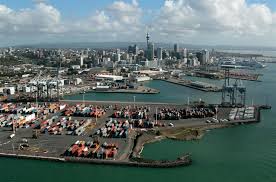
BERLIN: The Port of Hamburg is becoming a ‘smart port’. Some 40,000 lorries pass through the port every day, and a new road management system, consisting of sensors on roads and in parking spaces connected via the internet, is now helping to speed up the flow.

This is the internet of things (IoT) in a real-world application.

You might also like

Germany Raises 2020 Growth Forecast Slightly to 1.1%

03/02/2020

A top German carrier picks Huawei to help build its 5G network in potential snub to the US

21/01/2020

The system delivers real-time traffic information, including personalised alerts, to tablets, smartphones and in-cab telematics units, increasing productivity of the logistics companies using the port.

Hamburg’s ‘smartPORT’ system is just one of several examples of smart technology in practice to be presented by IHS Technology analyst Mark Watson at this year’s CWIEME Berlin exhibition in May.

“There has been a lot of important progress made in these areas recently that, when applied in a manufacturing context, could offer exponential benefits.

For example, instead of having sensors on roads, as in Hamburg, sensors on a production line could be used to monitor performance and relay information back to a central control room, enhancing efficiency by reducing the need for hands-on measurements.”

Watson believes electrical and electronics manufacturing companies can harness its potential and use it to their full advantage.

“The implementation of smart technology is a gradual process. It requires investment in hardware and software and involves a certain degree of training.

However, recent case studies have shown that devices can be installed to allow remote access to components, ensure quick customisation, and provide a large amount of data for maintenance and servicing, enhancing the efficiency of the manufacturing process.

“The development of ‘smart cities’ and ‘smart homes’ has introduced this technology to the public. It is now time to investigate how this can be used to positively impact businesses

Tags: Port

Related Stories

Germany Raises 2020 Growth Forecast Slightly to 1.1%

byadmin
03/02/2020

BERLIN: THE German government modestly raised its economic growth forecast for the country this year to 1.1%. Germany's economy, Europe's...

A top German carrier picks Huawei to help build its 5G network in potential snub to the US

byadmin
21/01/2020

Telefonica Deutschland, one of Germany’s top mobile carriers, has picked Huawei and Nokia to build out its 5G network. 5G...

Gold price surges amid geopolitical uncertainty

byadmin
13/01/2020

These are golden days for gold, the precious metal whose very name is a synonym for something special and successful....

India may overtake Germany to become fourth-largest economy in 2026: Report

byadmin
30/12/2019

India is expected to overtake Germany to become fourth-largest economy in 2026 and Japan to become third largest in 2034,...

Next Post

Ship owners claim Brussels 50% tax relief for seiners and longliners

  • Terms and Conditions
  • Disclaimer

© 2011 Customs Today -World's first newspaper on customs. Customs Today.

No Result
View All Result
  • Transfers and Postings
  • Latest News
  • Karachi
  • Islamabad
  • Lahore
  • National
  • Chambers & Associations
  • Business
  • About Us

© 2011 Customs Today -World's first newspaper on customs. Customs Today.