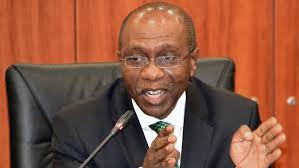
LAGOS: Governor of the Central Bank of Nigeria (CBN), Mr. Godwin Emefiele, has proposed that the incoming government to be led by Major-General Muhammadu Buhari (rtd) consider selling down its majority stakes in joint ventures with multinational oil companies to shore up state finances and raise funding for infrastructure development.
According to the UK-based Financial Times (FT) newspaper, Emefiele has asked CBN officials to evaluate how much could be raised if the state-owned Nigerian National Petroleum Corporation (NNPC) substantially reduced its 55 per cent equity in the joint ventures with Royal Dutch Shell, Chevron, ExxonMobil, Total and ENI which pump about half of Nigeria’s 2 two million barrels a day of oil production.


He believes that $75 billion is a realistic target, and that private equity groups could be encouraged to compete with the oil companies for acquisitions to ensure the price is competitive.
“If you sell down a 30 per cent stake, you could raise something substantial. It is an option they need to consider as a way of raising further funding,” he told FT.
He added that he had commissioned the research and would present the idea to Buhari when he assumes office on May 29.
“It is an option now because our revenues have dropped and we don’t need to pile on more debt. The alternative is to look for ways of releasing value from some of the government’s assets,” he said, adding that petroleum profit taxes could be adjusted upwards to compensate for the state’s reduced stake in crude oil sales.
Emefiele’s suggested remedy could prompt opposition from those ideologically opposed to selling off state assets, and resistance from politicians dependent on oil resources for patronage.
But it will find sympathetic ears among the more liberal, market minded reformers in the administration in waiting. Some of them believe that the NNPC should be sold off altogether — both to eliminate associated corruption, and to help free up commercial oil firms to invest in new production.
For years, Nigeria’s oil production has been stagnating at around 2m b/d because of uncertainty around stalled reforms and because of the state’s difficulties in raising its own share of development and maintenance costs.
Oil company executives argue that production could be almost doubled if the NNPC were commercialised or sold, and the companies freed up to meet the full cost of investment.
“Our manifesto says we are going to break the NNPC up. But the ultimate answer may well be to divest the whole thing,” said an influential politician in Buhari’s camp.
“It is an idea that will be seriously looked at. But I don’t think it can be the immediate priority. First, we need to get back to a position where revenues that belong to the people are getting into the Federation Account. We need to stop the leakages,” he said.
Buhari, who cut his teeth in office at a time when the state was the main driver in the economy, may be harder to convince.
“We can’t just wake up overnight and sell the NNPC. First we need to see how much damage has been done and how we can stabilise the situation,” he said in a pre-election interview with the FT.
However, reformers in his camp believe he may be persuaded otherwise if oil prices remain depressed given the scant alternatives to finance the ambitious changes he has promised.