GEORGE TOWN: Since the 1960’s Venezuela has appeared in textbook maps with a red and white striped arm on the Eastern border, indicating the so-called “reclamation zone” that represents a centuries-old land dispute with neighboring country and former British colony, Guyana.
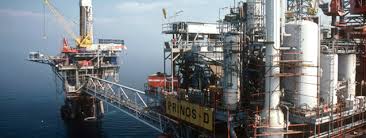
Aside from a few military confrontations during the 60s and 70s, the conflict has remained more passive than aggressive. But the debate resurfaced this month after ExxonMobil’s plan to start drilling offshore of Guyana.


According to Guyanese officials, Venezuelan foreign minister Delcy Rodriguez sent a letter to ExxonMobil’s Guyana office last month to oppose the move, as Venezuela claims jurisdiction over the maritime zone in question.
The Guyanese government released a statement requesting “that the government of the Bolivarian Republic of Venezuela desist from taking any actions that could only result in the stymieing of the development of Guyana and its people and that would be in contravention of international law.”
ExxonMobil, for their part, insisted they are operating offshore “under license from the government of Guyana.”
The US Company, who will reportedly be investing some $200 million in exploratory drilling of the designated Stabroek Block, maintains that “border issues are a matter for governments to resolve through bilateral discussions.”
The area referred to by Venezuela as the “reclamation zone” is two-thirds of Guyana’s territory, the vast mineral-rich region West of the Essequibo River.
A 1899 arbitration proceeding gave Britain rights to the Essequibo, but Venezuela called the ruling into question in 1966, upon Guyana’s independence from the UK.
Over decades, both governments have avoided opening a border crossing within the disputed zone. The only legal manner of travel between the neighboring countries remains to be by air, sea or through Brazil.
But relations between the two nations became somewhat more friendly during Venezuela’s Bolivarian revolution. After the formation of Hugo Chavez’s Petrocaribe alliance in 2005, Guyana accessed special financing that facilitated the construction of two power plants, among other energy projects.
A grant from the Bolivarian alliance ALBA of $2 million also saw the founding of a homeless shelter in Guyana’s West Berbice region. Completed in 2013, the shelter is called the Hugo Chavez Centre for Rehabilitation and Reintegration.
Still, both Chavez and his successor Nicolas Maduro have upheld Venezuela’s claim on the Essequibo, though neither president took any steps toward occupying the area.
Aside from gold and bauxite, the Essequibo area is believed to hold more than 15 billion barrels of oil. The region is notorious for illegal mining and other mercenary operations, such as the smuggling of Venezuelan oil.
Currently, Guyana imports 10,500 barrels a day from Trinidad and Tobago, and Venezuela. Under a 2009 Petrocaribe accord, the Caribbean nation covers its payments to Venezuela with rice and paddy, and has recently inquired about the possibility of exporting other cash crops in exchange for oil.