Customs Today
  • Home
  • Islamabad
  • Karachi
  • Lahore
  • National
  • Transfers and Postings
  • Chambers & Associations
  • Business
No Result
View All Result
Customs Today
  • Home
  • Islamabad
  • Karachi
  • Lahore
  • National
  • Transfers and Postings
  • Chambers & Associations
  • Business
No Result
View All Result
Customs Today
No Result
View All Result
Home Science & Technology Science

NASA uses glitter like material in future telescopes instead of solid glass

byCustoms Today Report
21/04/2015
in Science, Science & Technology
Share on FacebookShare on Twitter

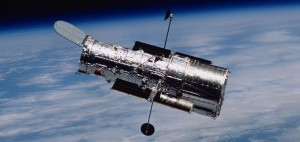
NEW YORK: Researchers at NASA’s Jet Propulsion Laboratory in Pasadena, California are looking to use glitter-like materials in future telescopes instead of solid glass to take images of new worlds.

Those who are aware about telescopes and the underlying mechanism should know that they use solid mirrors to image far-away objects. Large telescopes require complex mirrors, which are quite expensive and difficult to construct. Further because of their size and weight they add further challenges to constructing and launching a space telescope.


You might also like

Tesla driverless system to use updated radar technology

12/09/2016

Apple to develop its own self-driving technology

10/09/2016

Researchers have devised a concept called Orbiting Rainbows that addresses these issues. They propose using clouds of reflective glitter-like particles in place of mirrors to enable a telescope to view stars and exoplanets. The technology would enable high-resolution imaging at a fraction of the cost.

“It’s a floating cloud that acts as a mirror,” said Marco Quadrelli from JPL, the Orbiting Rainbows principal investigator. “There is no backing structure, no steel around it, no hinges; just a cloud.”

In the proposed Orbiting Rainbows system, the small cloud of glitter-like grains would be trapped and manipulated with multiple laser beams. The trapping happens because of pressure from the laser light — specifically, the momentum of photons translates into two forces: one that pushes particles away, and another that pushes the particles toward the axis of the light beam. The pressure of the laser light coming from different directions shapes the cloud and pushes the small grains to align in the same direction. In a space telescope, the tenuous cloud would be formed by millions of grains, each possibly as small as fractions of a millimeter in diameter.


Related Stories

Tesla driverless system to use updated radar technology

byCT Report
12/09/2016

WASHINGTON: Electric carmaker Tesla announced Sunday it was upgrading its Autopilot software to use more advanced radar technology. In a...

Apple to develop its own self-driving technology

byCT Report
10/09/2016

SAN FRANCISCO: Apple may not become an automaker, but it still wants to develop its own self-driving technology. The iPhone-maker's...

NASA spots slowest known magnetar

byCT Report
10/09/2016

WASHINGTON: Astronomers have found evidence of a magnetar - magnetised neutron star - that spins much slower than the slowest...

‘YouTubers’ outshining old-school television

byCT Report
09/08/2016

SAN FRANCISCO: A media revolution is taking place, and most people over 35 years of age aren’t tuned in. Millennial...

Next Post

Last month’s global climate made it hottest March in modern history

  • Terms and Conditions
  • Disclaimer

© 2011 Customs Today -World's first newspaper on customs. Customs Today.

No Result
View All Result
  • Transfers and Postings
  • Latest News
  • Karachi
  • Islamabad
  • Lahore
  • National
  • Chambers & Associations
  • Business
  • About Us

© 2011 Customs Today -World's first newspaper on customs. Customs Today.