

Customs Today
  • Home
  • Islamabad
  • Karachi
  • Lahore
  • National
  • Transfers and Postings
  • Chambers & Associations
  • Business
No Result
View All Result
Customs Today
  • Home
  • Islamabad
  • Karachi
  • Lahore
  • National
  • Transfers and Postings
  • Chambers & Associations
  • Business
No Result
View All Result
Customs Today
No Result
View All Result
Home Science & Technology Science

NASA’s Messenger spacecraft use colors to reveled mineral composition of Mercury’s surface

byCustoms Today Report
30/04/2015
in Science, Science & Technology
Share on FacebookShare on Twitter

You might also like

Tesla driverless system to use updated radar technology

12/09/2016

Apple to develop its own self-driving technology

10/09/2016

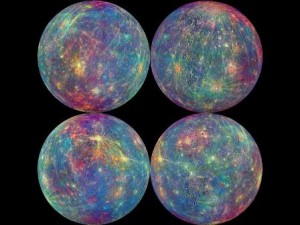
CANADA: Images taken by NASA’s Messenger spacecraft and released in the probe’s final days use colour to reveal the mineral composition of Mercury’s surface.
New images of Mercury show the planet as we’ve never seen it before: in a psychedelic profusion of colours. The images don’t show how Mercury looks in the visible light spectrum. Rather, they are composites, composed of years of data collated by the Mercury Atmosphere and Surface Composition Spectrometer instrument aboard NASA’s Messenger spacecraft and have provided researches with new insights about Mercury.
The spacecraft, which has been in orbit around the planet for four years, is due to be retired on Thursday — by crashing into Mercury’s surface at a speed of more than 8,750 miles per hour (3.91 kilometres per second). This will be done on the side closest to Earth so that NASA researchers can observe the impact in real time and receive data from the probe as it descends.
Ever since the probe entered Mercury’s orbit in 2011, it has been diligently collecting measurements of the surface of the planet, in hundreds of different wavelengths of light, from ultraviolet through to near-infrared. These wavelengths and combinations of wavelengths were then mapped into red, green and blue colours.
You can probably make out a little bit of what they show, which was the purpose of colour-coding the wavelengths in the first place. Some show the mineral composition of the surface; while others show the age of craters, or volcanic vents. This allows these relatively small features to be studied much more easily.

Related Stories

Tesla driverless system to use updated radar technology

byCT Report
12/09/2016

WASHINGTON: Electric carmaker Tesla announced Sunday it was upgrading its Autopilot software to use more advanced radar technology. In a...

Apple to develop its own self-driving technology

byCT Report
10/09/2016

SAN FRANCISCO: Apple may not become an automaker, but it still wants to develop its own self-driving technology. The iPhone-maker's...

NASA spots slowest known magnetar

byCT Report
10/09/2016

WASHINGTON: Astronomers have found evidence of a magnetar - magnetised neutron star - that spins much slower than the slowest...

‘YouTubers’ outshining old-school television

byCT Report
09/08/2016

SAN FRANCISCO: A media revolution is taking place, and most people over 35 years of age aren’t tuned in. Millennial...

Next Post

UK stocks sink in early move, FTSE 100 tumbles 0.2%

  • Terms and Conditions
  • Disclaimer

© 2011 Customs Today -World's first newspaper on customs. Customs Today.

No Result
View All Result
  • Transfers and Postings
  • Latest News
  • Karachi
  • Islamabad
  • Lahore
  • National
  • Chambers & Associations
  • Business
  • About Us

© 2011 Customs Today -World's first newspaper on customs. Customs Today.