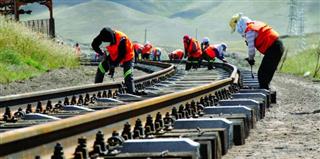


RIYADH: Further progress has been made in plans to build the Gulf region’s rail network, with Saudi Arabia looking to closely align the project with its economic and social priorities.
In mid-March the state agency that oversees the operation of the rail network, the Saudi Railways Organisation (SRO), signed a SR2.84m ($760,000) contract with Dornier Consulting, tasking the German firm to update and refine the blueprint for the national rail development project.
The objective is to focus the programme on the needs of the Saudi economy as well as draw up a conceptual framework consistent with the country’s National Transportation Strategy. This aims to reduce the reliance on automotive transport for both passengers and cargo, and integrate the Kingdom’s transport system to boost economic development.
The new network will dwarf Saudi Arabia’s existing rail system, which currently comprises some 1400 km of track. However, challenges remain in implementing the multibillion-dollar strategy on time and on budget, particularly with regard to the broader GCC-wide network project.
The 15-year rail programme, one of the world’s largest infrastructure projects with an estimated budget of $97bn to be spent before 2040, foresees up to 15,000 km of track being laid, combining freight with broad-gauge high-speed passenger and urban metro lines.
One element of the first phase is the Landbridge network linking Jeddah on the Red Sea with the city of Dammam on the Gulf, with branch lines to key industrial centres. The line will facilitate the fast transport of goods and raw materials from one side of the country to the other. It will also connect expanding mining, industrial and energy centres with both ports.
Another important part of the rollout is the SAR project, formerly known as the North-South Railway. Once completed, it will add approximately 2750 km of track consisting of two main lines. One will originate in Riyadh and run northwest to the Jordanian border, passing through Qassim, Hail and Al Jouf. The other line will connect the Al Jalamid mine in the north with processing and export facilities in Ras Al Khair on the Arabian Gulf.
An additional key component of the five-year programme is Saudi Arabia’s 663-km contribution to the GCC-wide rail system, with the region looking to host a seamless network of rail links criss-crossing its various borders. The ambitious project, which includes a 2177-km network, will link all six Gulf states by rail for the first time.
The rollout of urban rail networks is also expected to gain speed this year, with the Jeddah Metro, Riyadh Metro and the Makkah Mass Rail Transit all set to move forward, offering extensive opportunities for construction and rail service contractors.

lamic banking assets reach Rs14.47 trillion, sector share rises to 23%
KARACHI: Pakistan’s Islamic banking sector expanded during 2025, increasing its share in the country’s financial system with assets reaching nearly...