Customs Today
  • Home
  • Islamabad
  • Karachi
  • Lahore
  • National
  • Transfers and Postings
  • Chambers & Associations
  • Business
No Result
View All Result
Customs Today
  • Home
  • Islamabad
  • Karachi
  • Lahore
  • National
  • Transfers and Postings
  • Chambers & Associations
  • Business
No Result
View All Result
Customs Today
No Result
View All Result
Home Science & Technology Science

Marine life at risk of extinction identified with help from fossils

byCustoms Today Report
04/05/2015
in Science, Science & Technology
Share on FacebookShare on Twitter

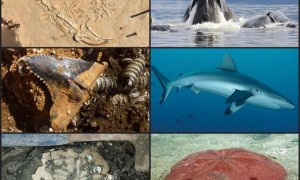
LONDON: US – Patterns of extinction in marine ecosystems over the last 23 million years have been revealed in a new study.

Worldwide patterns of extinction remained remarkably similar over this period, with the same groups of animals showing similar rates of extinction throughout.


You might also like

Tesla driverless system to use updated radar technology

12/09/2016

Apple to develop its own self-driving technology

10/09/2016

Researchers managed to identify a consistent set of characteristics associated with elevated extinction risk.

They then used these patterns as a baseline to predict which ocean areas and marine organisms would be most at risk today, without added threats of human-caused habitat destruction, overfishing, pollution and ocean acidification.

“Our goal was to diagnose which species are vulnerable in the modern world, using the past as a guide,” said study lead author Seth Finnegan.

Finally, the authors combined the natural or ‘intrinsic’ extinction risk with current threats from humans and climate change to obtain a global map of potential future hotspots of extinction risk.

“It’s very difficult to detect extinctions in the modern oceans, but fossils can help fill in the gaps,” said co-author Sean Anderson.

“Our findings can help prioritise areas and species that might be at greater risk of extinction and that might require extra attention, conservation or management.”

The study found that animals with small geographic ranges are most at risk of extinction, Mr Finnegan saidIn addition, some groups tend to be more extinction-prone than others. For example, in the fossil record, whales, dolphins and seals show higher risk of extinction than sharks or invertebrates such as corals. Clams and mussels, known as called bivalves, had about one-tenth the extinction risk of mammals.


Related Stories

Tesla driverless system to use updated radar technology

byCT Report
12/09/2016

WASHINGTON: Electric carmaker Tesla announced Sunday it was upgrading its Autopilot software to use more advanced radar technology. In a...

Apple to develop its own self-driving technology

byCT Report
10/09/2016

SAN FRANCISCO: Apple may not become an automaker, but it still wants to develop its own self-driving technology. The iPhone-maker's...

NASA spots slowest known magnetar

byCT Report
10/09/2016

WASHINGTON: Astronomers have found evidence of a magnetar - magnetised neutron star - that spins much slower than the slowest...

‘YouTubers’ outshining old-school television

byCT Report
09/08/2016

SAN FRANCISCO: A media revolution is taking place, and most people over 35 years of age aren’t tuned in. Millennial...

Next Post

SpacesX introduces 1st Turkmenistan Satellite into Orbit

  • Terms and Conditions
  • Disclaimer

© 2011 Customs Today -World's first newspaper on customs. Customs Today.

No Result
View All Result
  • Transfers and Postings
  • Latest News
  • Karachi
  • Islamabad
  • Lahore
  • National
  • Chambers & Associations
  • Business
  • About Us

© 2011 Customs Today -World's first newspaper on customs. Customs Today.