

Customs Today
  • Home
  • Islamabad
  • Karachi
  • Lahore
  • National
  • Transfers and Postings
  • Chambers & Associations
  • Business
No Result
View All Result
Customs Today
  • Home
  • Islamabad
  • Karachi
  • Lahore
  • National
  • Transfers and Postings
  • Chambers & Associations
  • Business
No Result
View All Result
Customs Today
No Result
View All Result
Home Science & Technology Science

60 percent of the Earth’s large herbivores to the brink of extinction

byCustoms Today Report
06/05/2015
in Science, Science & Technology
Share on FacebookShare on Twitter

You might also like

Tesla driverless system to use updated radar technology

12/09/2016

Apple to develop its own self-driving technology

10/09/2016

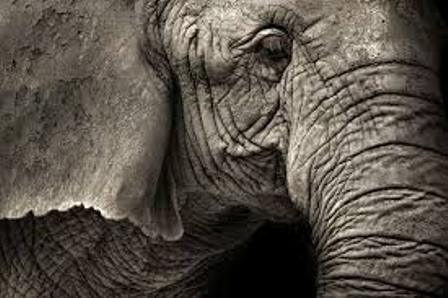
LONDON: Oregon State College of Forestry professor Bill Ripple published a study last year which proved that 60 percent of the world’s largest carnivores were at risk of extinction, and in a new report published in the journal Science Advances, Ripple revealed that 60 percent of the world’s largest herbivores are also within extinction risk.
After analyzing population data from the International Union for Conservation of Nature, Ripple and his research team found that a majority of large plant-eating animals are at risk of extinction, a frightening realization since many of these species are vital elements of the food web across areas of Africa and Southeast Asia which cannot be replaced by small species. This raised extinction risk is the result of a mixture of hunting and habitat loss due to deforestation and the spread of livestock.
“I was surprised by the fact that so many of these large animals were consider threatened,” Ripple told The Huffington Post. “Most of the very large herbivores have already been wiped out in developed countries.”
Despite the troubling findings reported in his study titled “Collapse of the World’s Largest Herbivores,” recent responses to biodiversity catastrophes have made Ripple optimistic about conservation. He told the Post that Rep. Peter DeFazio’s bill to reinforce the illegality of the wildlife trade and Yao Ming’s efforts to combat shark fin soup in China are both positive signs of change, but hopes that wealthy individuals worldwide will donate to help further protect newly-endangered species.

Related Stories

Tesla driverless system to use updated radar technology

byCT Report
12/09/2016

WASHINGTON: Electric carmaker Tesla announced Sunday it was upgrading its Autopilot software to use more advanced radar technology. In a...

Apple to develop its own self-driving technology

byCT Report
10/09/2016

SAN FRANCISCO: Apple may not become an automaker, but it still wants to develop its own self-driving technology. The iPhone-maker's...

NASA spots slowest known magnetar

byCT Report
10/09/2016

WASHINGTON: Astronomers have found evidence of a magnetar - magnetised neutron star - that spins much slower than the slowest...

‘YouTubers’ outshining old-school television

byCT Report
09/08/2016

SAN FRANCISCO: A media revolution is taking place, and most people over 35 years of age aren’t tuned in. Millennial...

Next Post

Two drug smuggler narrow escaped for death penalty in Singapore

  • Terms and Conditions
  • Disclaimer

© 2011 Customs Today -World's first newspaper on customs. Customs Today.

No Result
View All Result
  • Transfers and Postings
  • Latest News
  • Karachi
  • Islamabad
  • Lahore
  • National
  • Chambers & Associations
  • Business
  • About Us

© 2011 Customs Today -World's first newspaper on customs. Customs Today.