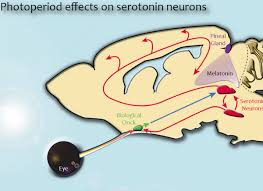


NEW YORK: U.S. scientists say they’re zeroing in on a small area of the brain responsible for seasonal affective disorder or SAD, a kind of depression linked to the same season every year.
It most commonly strikes people in the short, gray days of winter, leaving them tired, irritable, depressed and experiencing trouble concentrating until spring and its brighter, sunnier days arrives.
It has been well-established that the amount of sunlight a person is exposed to, and the resultant effect on their circadian rhythm or body clock, plays a key role in the condition.
Neurotransmitters in the brain including serotonin and melatonin are also thought to be involved, but up until now efforts to identify the basic neurobiological mechanisms responsible for SAD have been unsuccessful.
Now researchers at Vanderbilt University, writing in the journal Current Biology, report they’ve tracked the seasonal light cycle effects linked to SAD to a small area of the midbrain known as the dorsal raphe nucleus.
The finding comes from experiments with mice, an animal model commonly used to study human depression.

Karachi Port sets 138-year cargo handling record
KARACHI: Pakistan's maritime sector has achieved a major milestone as Karachi Port set a new record in its 138-year history...