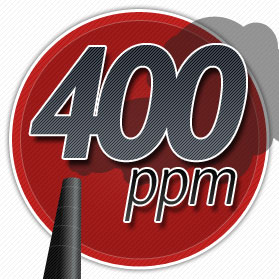
LONDON: The first time an atmospheric carbon dioxide concentration of above 400 parts per million was measured was in the Arctic in 2012. That same threshold was reached at the National Oceanic and Atmospheric Administration’s Mauna Loa Observatory in Hawaii in 2013. And now, NOAA reports the monthly global average concentration of the greenhouse gas has surpassed 400 parts per million for the first time.This isn’t good. In fact, the last time it happened was up to 5 million years ago.
You might also like


“It’s both disturbing and daunting,” NOAA chief greenhouse-gas scientist Pieter Tans told the Associated Press. “Daunting from the standpoint on how hard it is to slow this down.”
There’s nothing special about 400 ppm of carbon dioxide in our atmosphere. Temperatures around the world continue to rise; our air remains breathable, for now; life goes on. But 400 ppm is a “milestone,” scientists say — one they have feared for some time. The Washington Post thought it worth noting when just Mauna Loa registered 400 ppm two years ago.
“Reaching 400 ppm doesn’t mean much in itself, but the steady increase in atmospheric greenhouse gases should serve as a stark reminder of the task facing politicians” ahead of climate talks in Paris later this year, Ed Hawkins, a climate scientist at the University of Reading, told the Guardian.
One of the problems with carbon dioxide levels: Even if all human carbon emissions stopped immediately, it would take quite a while for CO2 to be cleansed from the atmosphere.