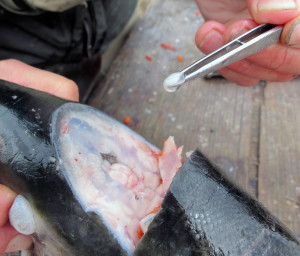
NEW YORK: New research on the Nushagak River – one of the largest Chinook salmon runs in the world – used chemical tags in a fish’s ear bones to tell where it was born and raised. Sean Brennan is a post-doc at the University of Washington’s School of Aquatic and Fisheries Sciences. He and his team hope the study research will help managers better understand how their fisheries work.
When you catch a salmon in the bay, how do you know where it came from? That’s long been a challenge put to fishery managers, who need that information to make decisions about catch and escapement.
You might also like


A new study, published May 15 in Science Advances, hones in on habitats where chinook salmon are born and raised by tracking chemical tags in the fish’s otolith.
Sean Brennan, then a doctoral student at the University of Alaska Fairbanks’ School of Fisheries and Ocean Sciences, led the research in Bristol Bay’s Nushagak River, home to one of the world’s largest wild chinook salmon runs.
In June of 2011, Brennan spent several days on the docks of Peter Pan Seafoods in Dillingham, dissecting the heads of chinooks that were on their way to be processed. He collected 255 otoliths, or “ear bones,” using tweezers to pull out the thin white discs.