Customs Today
  • Home
  • Islamabad
  • Karachi
  • Lahore
  • National
  • Transfers and Postings
  • Chambers & Associations
  • Business
No Result
View All Result
Customs Today
  • Home
  • Islamabad
  • Karachi
  • Lahore
  • National
  • Transfers and Postings
  • Chambers & Associations
  • Business
No Result
View All Result
Customs Today
No Result
View All Result
Home Science & Technology Science

Antarctic glaciers once thought to be stable suddenly melting at a massive rate, say scientists

byCustoms Today Report
25/05/2015
in Science, Science & Technology
Share on FacebookShare on Twitter

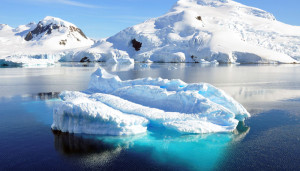
NEW YORK: A group of scientists have observed a sudden increase of ice loss in a previously stable region of Antarctica.

Using measurements of the elevation of the Antarctic ice sheet made by a suite of satellites, the team from the University of Bristol, UK found that the Southern Antarctic Peninsula showed no signs of change up to 2009. Around 2009, multiple glaciers along a vast coastal expanse, measuring some 750km in length, suddenly started to shed ice into the ocean at a nearly constant rate of 60 cubic km, or about 55 trillion litres of water, each year.


You might also like

Tesla driverless system to use updated radar technology

12/09/2016

Apple to develop its own self-driving technology

10/09/2016

This makes the region the second largest contributor to sea level rise in Antarctica and the ice loss shows no sign of waning.

Team leader Bert Wouters said that to date, the glaciers added roughly 300 cubic km of water to the ocean, which is the equivalent of the volume of nearly 350,000 Empire State Buildings combined. By analysing roughly 5 years of the data, the researchers found that the ice surface of some of the glaciers is currently going down by as much as 4m each year.

The ice loss in the region is so large that it causes small changes in the gravity field of the Earth, which can be detected by another satellite mission, the Gravity Recovery and Climate Experiment (GRACE).

Wouters said that it appears that sometime around 2009, the ice shelf thinning and the subsurface melting of the glaciers passed a critical threshold which triggered the sudden ice loss. However, compared to other regions in Antarctica, the Southern Peninsula is rather understudied, exactly because it did not show any changes in the past, ironically.


 

Related Stories

Tesla driverless system to use updated radar technology

byCT Report
12/09/2016

WASHINGTON: Electric carmaker Tesla announced Sunday it was upgrading its Autopilot software to use more advanced radar technology. In a...

Apple to develop its own self-driving technology

byCT Report
10/09/2016

SAN FRANCISCO: Apple may not become an automaker, but it still wants to develop its own self-driving technology. The iPhone-maker's...

NASA spots slowest known magnetar

byCT Report
10/09/2016

WASHINGTON: Astronomers have found evidence of a magnetar - magnetised neutron star - that spins much slower than the slowest...

‘YouTubers’ outshining old-school television

byCT Report
09/08/2016

SAN FRANCISCO: A media revolution is taking place, and most people over 35 years of age aren’t tuned in. Millennial...

Next Post

Stone tools older than man, find in Kenya

  • Terms and Conditions
  • Disclaimer

© 2011 Customs Today -World's first newspaper on customs. Customs Today.

No Result
View All Result
  • Transfers and Postings
  • Latest News
  • Karachi
  • Islamabad
  • Lahore
  • National
  • Chambers & Associations
  • Business
  • About Us

© 2011 Customs Today -World's first newspaper on customs. Customs Today.