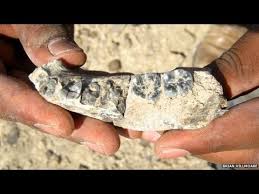
HARROW: A new human ancestor species which roamed the Afar region of Ethiopia 3.3 to 3.5 million years ago has been discovered by an international team of scientists. Named Australopithecus deyiremeda, this new species joins ‘Lucy’ the famous hominin that is known to have lived in the same region. The discovery is described in the science journal Nature.
Lucy’s species (called Australopithecus afarensis ) lived from 2.9 million years ago to 3.8 million years ago, overlapping in time with the new species. The new discovery is the most conclusive evidence that more than one closely related human ancestor species lived in the same period, more than 3 million years ago. The species name “deyiremeda” (day-ihreme-dah) means “close relative” in the language spoken by the Afar people, according to the Cleveland Museum of Natural History.


Australopithecus deyiremeda differs from Lucy’s species in terms of the shape and size of its thick-enameled teeth and the robust architecture of its lower jaws. The anterior teeth are also relatively small indicating that it probably had a different diet.
“The new species is yet another confirmation that Lucy’s species, Australopithecus afarensis, was not the only potential human ancestor species that roamed in what is now the Afar region of Ethiopia during the middle Pliocene,” said lead author Dr Yohannes Haile-Selassie of the Cleveland Museum. “Current fossil evidence from the Woranso-Mille study area clearly shows that there were at least two, if not three, early human species living at the same time and in close.