FRANCE: The so-called machine-learning approach links powerful software techniques that make it possible for the robot to learn new tasks rapidly with a relatively small amount of training.
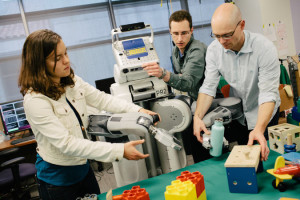
In an engineering laboratory here, a robot has learned to screw the cap on a bottle, even figuring out the need to apply a subtle backward twist to find the thread before turning it the right way.


This and other activities — including putting a clothes hanger on a rod, inserting a block into a tight space and placing a hammer at the correct angle to remove a nail from a block of wood — may seem like pedestrian actions. But they represent significant advances in robotic learning, by a group of researchers at the University of California, Berkeley, who have trained a two-armed machine to match human dexterity and speed in performing these tasks.
The significance of the work is in the use of a so-called machine-learning approach that links powerful software techniques that make it possible for the robot to learn new tasks rapidly with a relatively small amount of training.
The new approach includes a powerful artificial intelligence technique known as “deep learning,” which has previously been used to achieve major advances in both computer vision and speech recognition. Now the researchers have found that it can also be used to improve the actions of robots working on tasks that require both machine vision and touch.