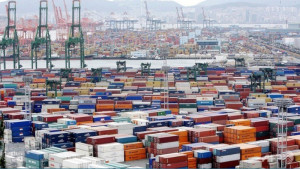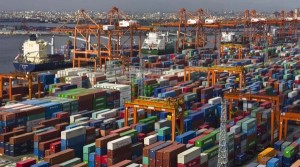
MANILA: A presidential decree that the Philippine ports of Batangas and Subic will be considered part of Manila port is facing strong opposition from shippers and truckers, even though it will enable ships to be diverted to the alternative terminals without changes to the bill of lading.
Chronic port congestion in Manila last year forced the Philippine Ports Authority (PPA) to come up with alternatives for container carriers that were delayed outside the port or alongside for days. Banangas and Subic were the most obvious alternatives and vessels were diverted to the ports.
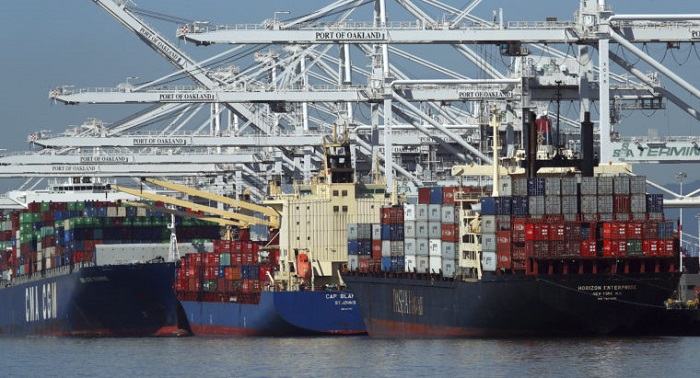

Political momentum is now developing for the formalisation of the presidential decree bringing the two ports under Manila, but shippers are not convinced, according to the Philippines Transport and Logistics 2015 report by Transport Intelligence (Ti).
While the government is keen to encourage the diversification of cargo to these ports, as well as the spread of manufacturing away from Manila, the Ti report said the policy faced severe headwinds, despite various financial incentives from the PPA and operators to reduce port charges and vessel handling fees.
Shippers complain that trucking to Subic’s container facility, operated by International Container Services Inc. (ICTSI), can cost up to five times as much as using Manila. Subic is situated to the north of the capital city, with a shortage of trucks and trailers and road congestion limiting the available fleet at any given time.
Most of the manufacturing is located south of Manila in the Laguna area of Luzon, and the container traffic travels through the Manila terminals operated by ICTSI, Asia Terminals Inc. (ATI) and Manila North Harbor Port.
However, last year getting the boxes in and out of the terminals was a nightmare, the result of multiple factors. A day time trucking ban from February through September caused chaos, compounded by a second half surge in imports. This caused overloaded roads and trucking networks to become even more congested, resulting in a huge build-up of empty and laden boxes at the port.
Even in the final week of 2014, waiting times for vessels at the port’s main container terminals were sometimes as high as 10 days, while box dwell times fluctuated at 10-18 days.
According to the Supply Chain Management Association of the Philippines, the truck ban added an average of two to three days to lead time, caused longer turnaround for trucks and increased overtime costs, while also doing little to ease traffic, as many shippers serving Manila simply loaded — and overloaded — smaller trucks to complete deliveries, Ti noted.
“In the first quarter, dwell times and vessel queues at Manila dropped off substantially, but given the congested arteries and truck shortages suffered by the Philippines, most lines, shippers and port operators believe any major surge in demand could see congestion and delays reoccur,” according to the Ti report.
This concern is driving port and government officials to develop alternative gateways. Subic has ample capacity for further expansion, despite seeing volumes almost double in 2014 to 77,177 TEUs, but Batangas’ needs more yard cranes to handle any further increase in demand.
Batangas saw a record 762 percent box surge in 2014 through Batangas Container Terminal (BCT), which is managed by ATI. January volumes increased by around 1,200 percent, compared to the same period last year.
Still, BCT is south of Manila and closer to the manufacturing centre and is continuing to expand its role as an alternative to the capital, especially for shippers in the production area of Calabarzon. BCT handled over 12,000 TEUs in January, and ATI said it expected the terminal volume to further pick up following the recent dredging of the Batangas Port entrance channel, further deepening the turn basin to 42 feet.
While the controversy rages over Subic and Batangas as viable alternatives to shipping through Manila, possibly the most viable long-term solution yet is the expansion of an inland port south of the capital, a project that will be combined with the recommissioning of a disused rail link to the port.
Laguna Gateway Inland Container Terminal, a dry port operated by ICTSI, is situated 36 miles south of Manila and its expansion will effectively add 250,000 TEUs of capacity to ICTSI’s Manila International Container Terminal (MICT). The port operator claims this will increase capacity at Manila’s main terminal by 10 percent,
Christian Gonzalez, ICTSI vice president and head of Asia-Pacific, said the existing railroad connection to the port that was abandoned in 2003 because of slowing business. The rail service will directly link the dry port and MICT, the country’s largest and sole dedicated container handling facility.
Joint venture partners with ICTSI in the development of the Laguna facilities in Calamba City in the province of Laguna are Transnational Diversified Group and Nippon Container Terminals Co.
The ability to rail containers in and out of Manila port will be vastly more efficient than the one-truck, one-box system. “Laguna dry port will help lower MICT’s import inventory, average import dwell time and laden yard utilization by offering storage services to clients in southern Luzon,” Gonzalez said.
As a regional logistics hub, Laguna will provide much-needed logistical support to manufacturers, importers and exporters at the economic zones within the Calabarzon area by reducing truck turnaround time and accelerating container movement, ICTSI said. It will offer both short-term and long-term storage options as well as transport service to and from MICT.
ICTSI was the first logistics company to introduce intermodal freight transport into the Philippines when it offered container transport service by rail from the late 1990s to the early 2000s. However, a slowdown in the container market in southern Luzon saw ICTSI divesting from the business in 2003.
The improving Philippine economy in recent years resulted in increased container traffic, prompting ICTSI to re-open the Laguna dry port in March to support the growing volume. While the connections with Manila are currently by road, ICTSI plans to revive the rail freight service to and from MICT “in the near future.”
“Once everybody starts using Laguna dry port, we can expect even better productivity levels at MICT,” said Gonzalez. “Most importantly, the whole economy will benefit from this project.”