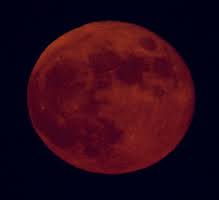
NEW YORK: As the first full moon of June enchanted viewers’ eyes on Tuesday evening, scientists explain the significance of Strawberry Moon. The nickname of the celestial body derives from the strawberry harvests that are usually collected during this time of the year.
Long before science researchers made their most significant discoveries and established the knowledge system we now know today, people used popular names to describe some of the concepts we have uncovered in the present. Such is the case of the calendar denominations as very few people knew back then how to indicate the month of January, February, etc.


Most of the times, scientists used terms that efficiently described the characteristics of the respective month. This is how June acquired the popular name of “Strawberry Moon”, based on the characteristics of the celestial body and on the agricultural practices that are specific for this month.
The Roman and Greek calendars used agricultural habits and astronomical events to divide the year in months, semester and trimesters. Thus, tribes knew when to cultivate certain plants and when to collect the crops.
A month-long period was usually established according to the moon cycle, so the first day of the month used to begin with a new full moon and most likely ended when a new cycle started. June is the month when the first harvests of strawberries appear. Native Americans relied on the light of the full moon to harvest the fruits; therefore, the month and the first full moon of the month are generically described as ‘Strawberry Moon’, scientists explain.
The astronomical event was closely observed by researchers on Tuesday night. Even though the phenomenon repeats itself every year, there are new discoveries that are being made with each ‘Strawberry Moon’ that is being observed. The sky was clear this year, so scientists enjoyed the view of an incredibly luminous and close moon.